Enabling Liquid
Staking on Cronos
Zero-to-one
Web 3
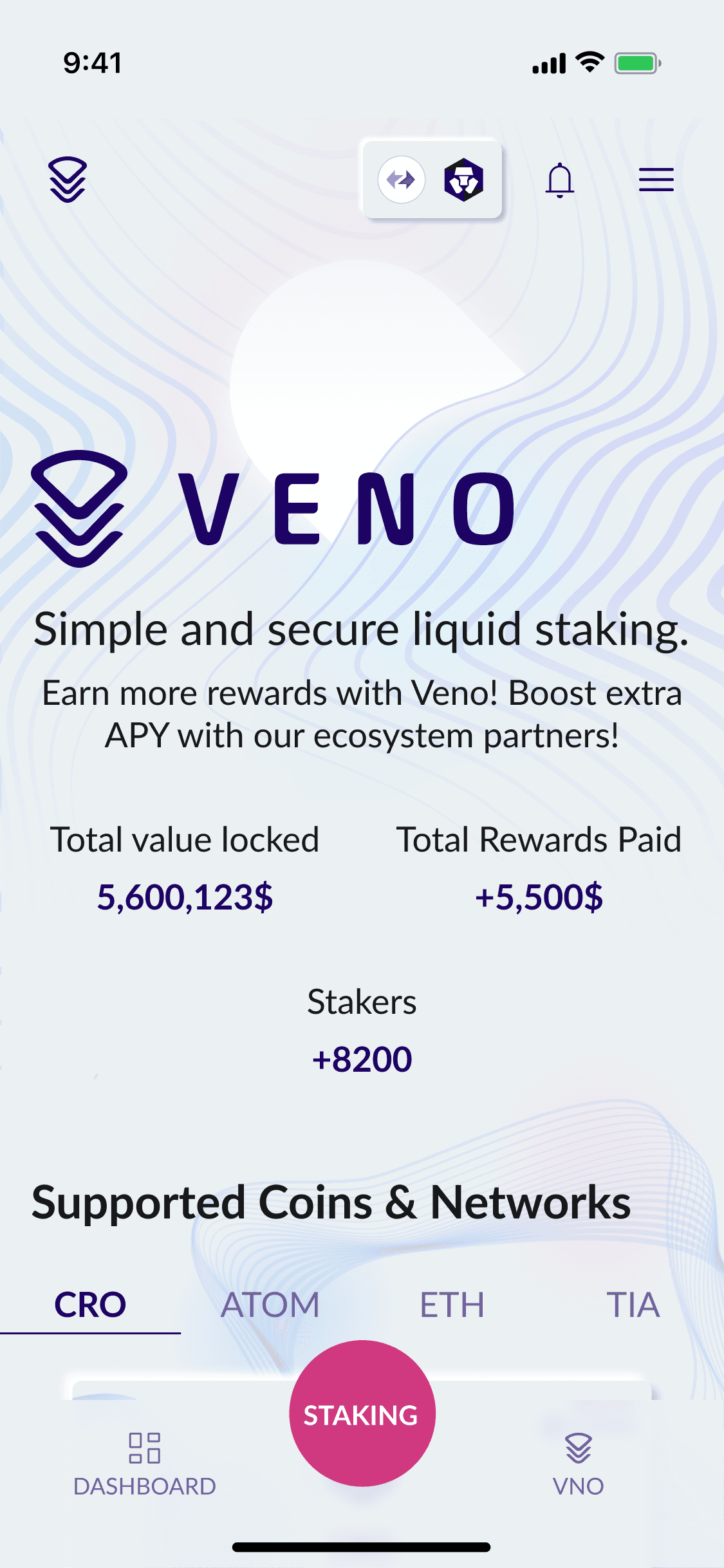
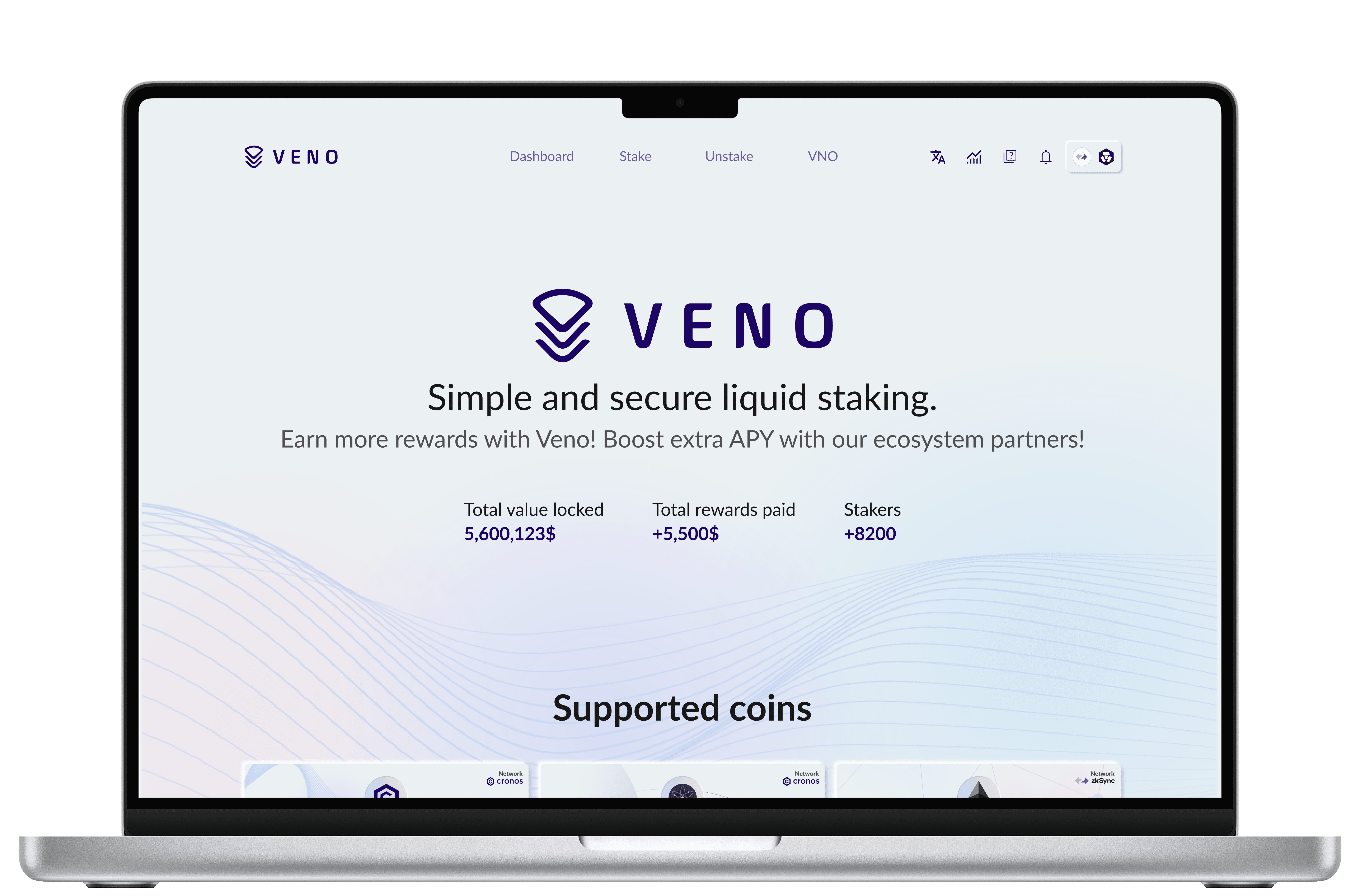
Veno is a liquid staking protocol on Cronos. It lets users earn staking rewards while keeping their tokens usable across DeFi.
The real design challenge wasn't interface. It was trust in a system whose value state changes without the user touching it.


Outcome & Impact
Veno launched on Cronos mainnet, contributing to sustained growth over time.
(Current metrics as of today)
$25M+
in total value locked
17,000+
users onboarded
$775K+
in rewards distributed
Why this mattered
Before Veno, staking on Cronos meant locking tokens out of circulation.
Liquid staking would solve three things at once:
Keep user liquidity active in DeFi
Lower the barrier for users unwilling to lock funds
Give partner protocols a composable staking primitive
My role
Senior Product Designer, operating at Lead scope.
Sole designer on the protocol, discovery to mainnet launch.
Owned: research, UX strategy, information architecture, interaction design, design QA. Led: design direction, cross-functional alignment with product and engineering, design critique, and exec-level decisions on tradeoffs.
On a greenfield DeFi product, leadership meant setting the mental model before setting the pixels.

Research
approach
Four streams, one insight: the problem was comprehension, not interface.
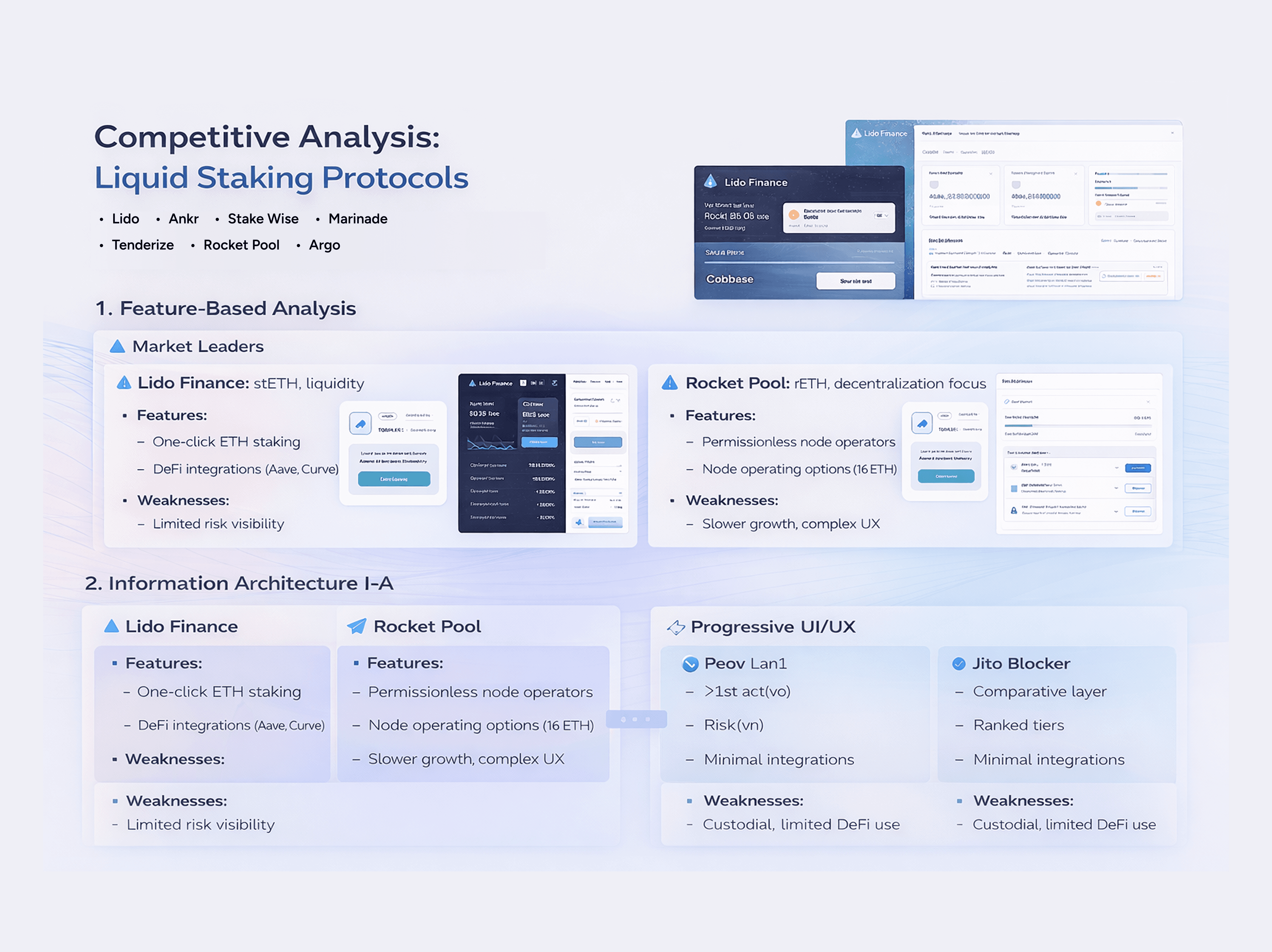
Competitive analysis
User interviews
Wireframes
User testing
What testing revealed
40%
Success rate
8
Participants
First-round usability testing hit a 40% success rate. Across eight participants, the failure pattern was consistent and it wasn't about the staking flow itself.
Three insights explained why:
First-round usability testing hit a 40% success rate. Across eight participants, the failure pattern was consistent and it wasn't about the staking flow itself.
Three insights explained why:
Users needed clarity before committing funds
Liquidity was a major hesitation point
Users didn't know what to do with LCRO
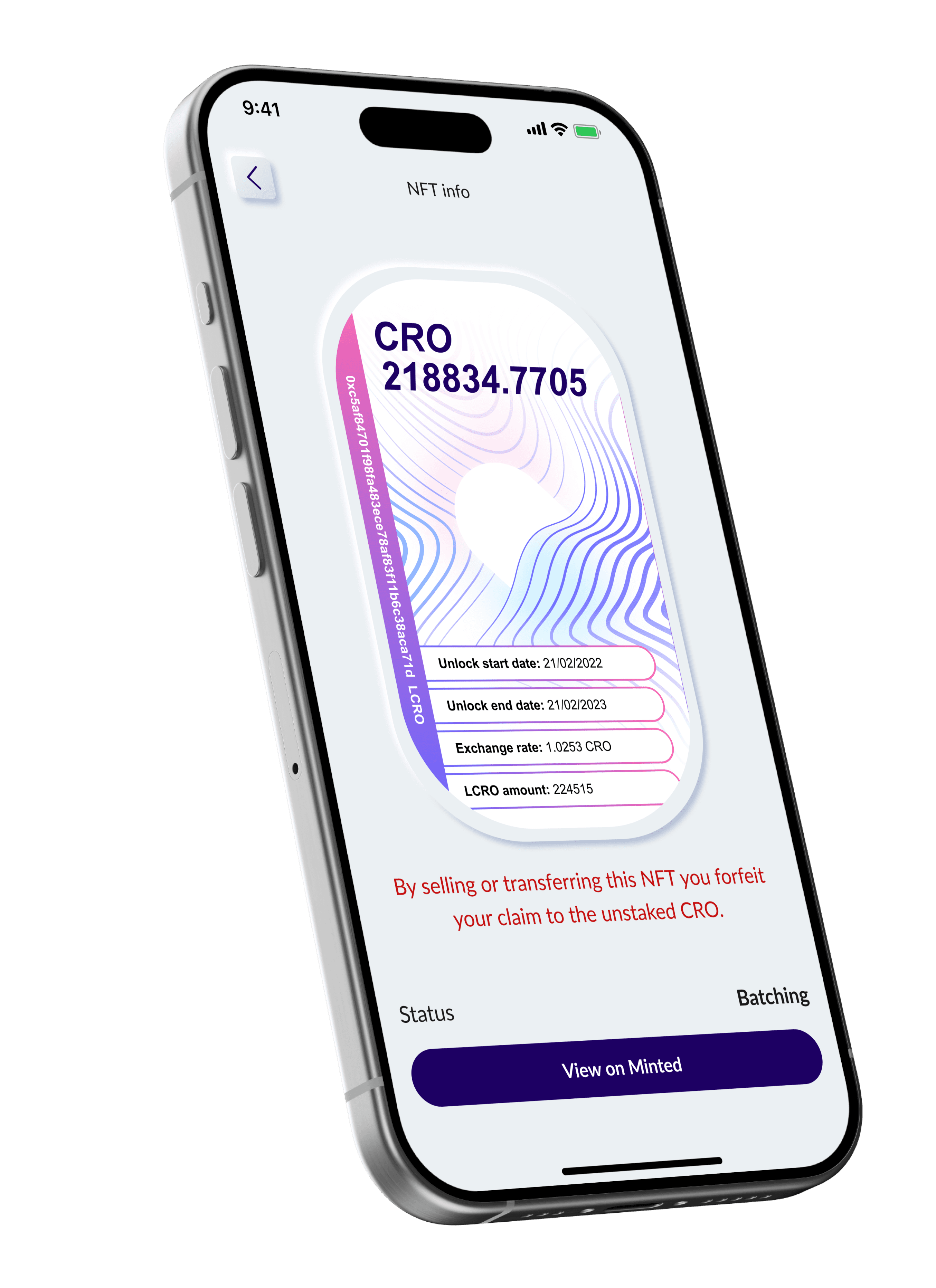
What we learnt
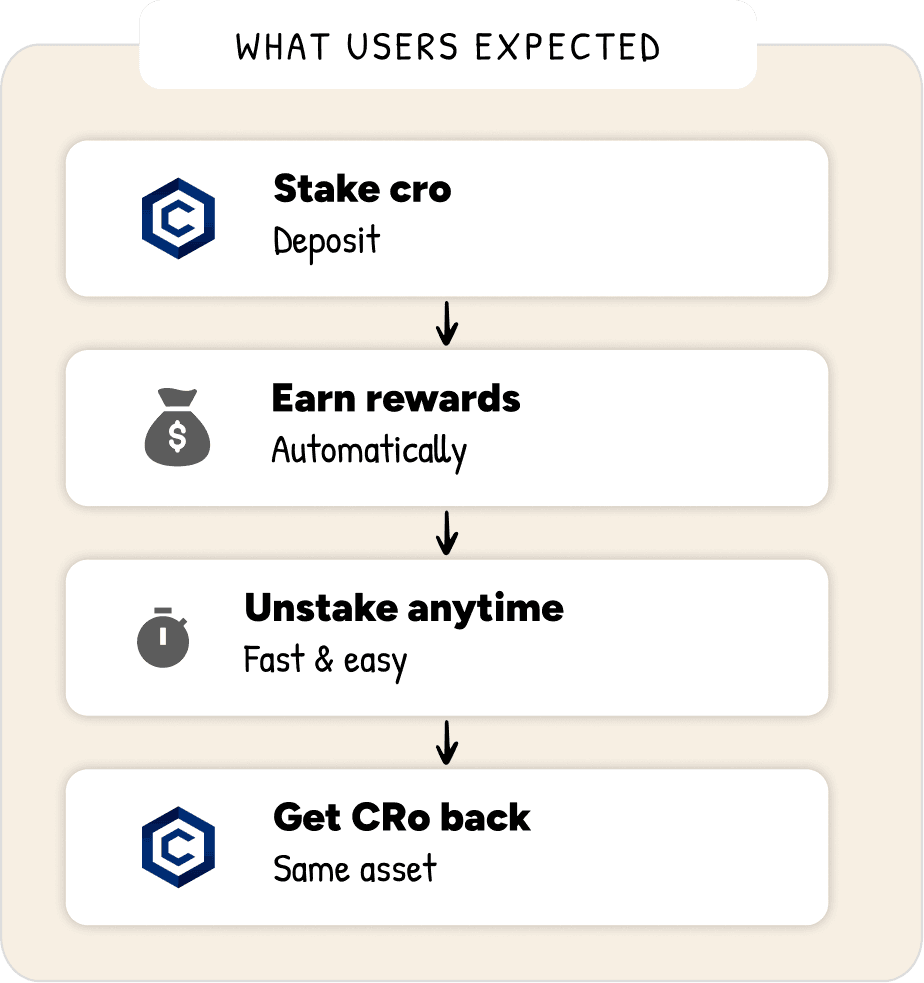
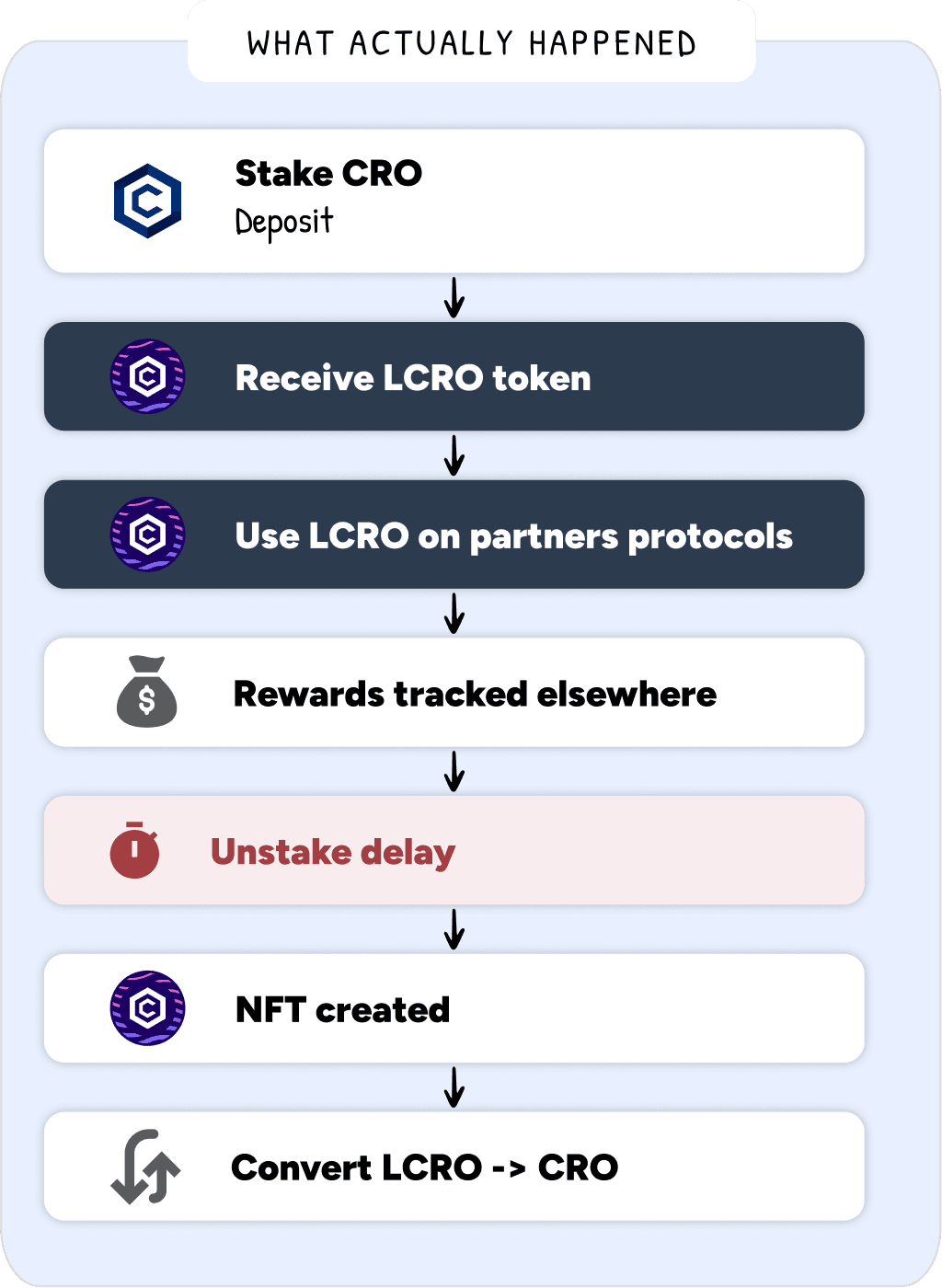
Users weren't failing because the staking flow was broken.
They were failing because they received LCRO and had no idea what it was for.
Our initial brief was wrong. We'd framed the problem as "design a simple staking interface" but simplicity wasn't the barrier. Users couldn't trust a token whose value state changed without them, and they couldn't see its utility beyond the transaction.
The challenge wasn't interface polish. It was mental models.
Users weren't failing because the staking flow was broken.
They were failing because they received LCRO and had no idea what it was for.
Our initial brief was wrong. We'd framed the problem as "design a simple staking interface" but simplicity wasn't the barrier. Users couldn't trust a token whose value state changed without them, and they couldn't see its utility beyond the transaction.
The challenge wasn't interface polish. It was mental models.
Reframing the problem
The initial brief was wrong.
“How do we design a simple liquid staking interface?”
Became
How do we help users trust a token that changes value without their input and understand its utility across the ecosystem?

The initial brief was wrong.
“How do we design a simple liquid staking interface?”
Became
How do we help users trust a token that changes value without their input and understand its utility across the ecosystem?
UX Strategy
& Product Decisions
The UX strategy focused on making liquid staking feel safe, understandable, and low-effort, especially for users who were new to DeFi.
Build confidence first. Expose complexity only when it becomes relevant.
Four principles followed:
Principle #1
Progressive disclosure of complexity
Advanced mechanics such as unstaking delays, receipt tokens, and NFT withdrawal flows were introduced only when they became relevant. This reduced cognitive load early in the journey and kept the initial staking experience focused and approachable.
Principle #2
Extended the flow beyond staking
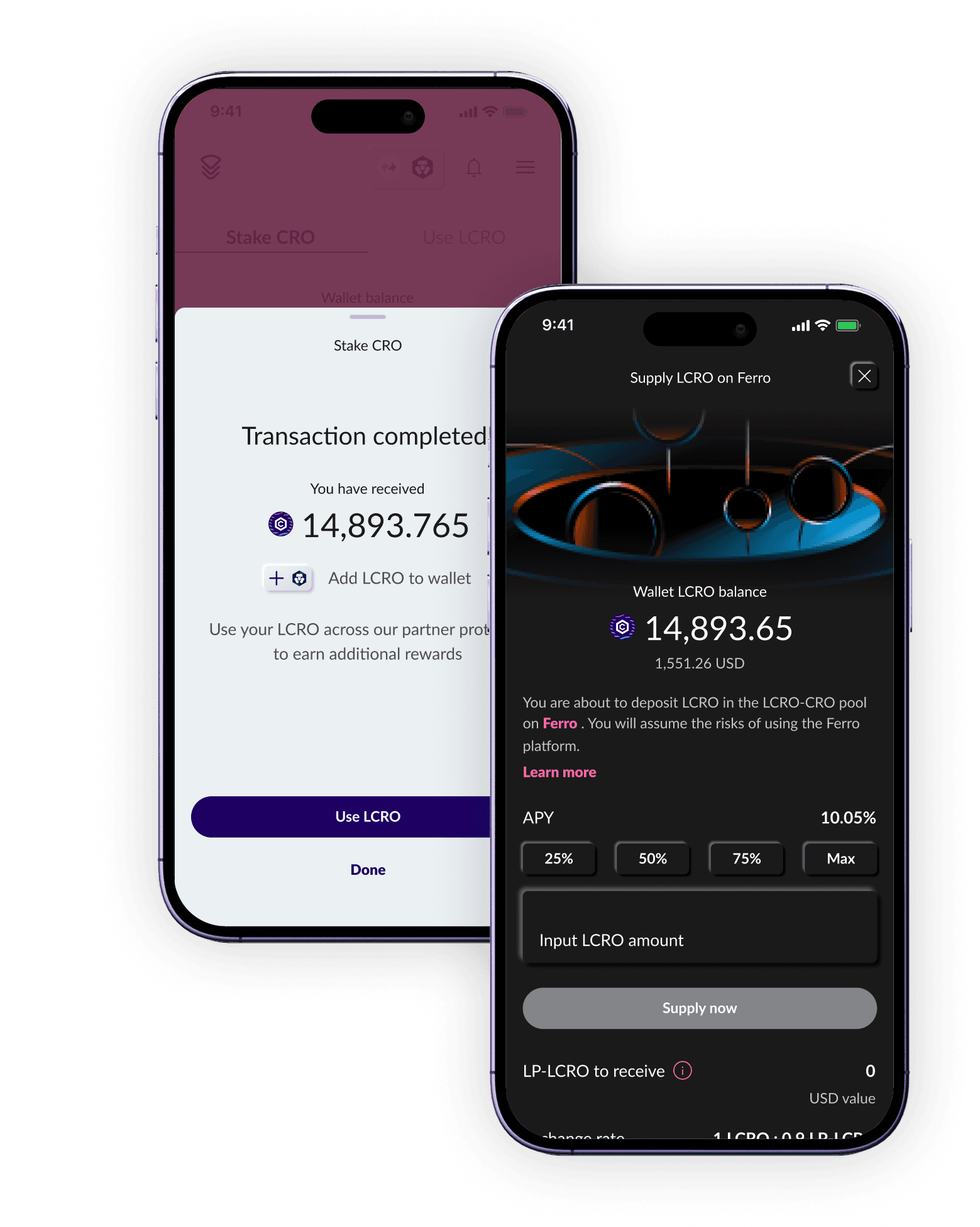
The original flow ended at transaction success, leaving users unsure what they could do with their new token. We expanded the journey by guiding users to the next relevant actions and embedding partner protocol opportunities directly within Veno, so they could immediately use the token without leaving the platform.
Principle #3
Structured around user intent
Navigation, labels, and flows were designed around what users wanted to do or stake, track rewards, or manage assets rather than around the protocol’s internal logic. This made the product easier to navigate and reduced friction across key journeys.
Principle #4
Strengthened onboarding around staking mechanics
Users did not always understand the role of receipt tokens or why an NFT was generated during unstaking. We strengthened onboarding with clearer explanations and guidance, helping users understand what these assets were, why they appeared, and what to do with them next.
Solution
Filters
Filters
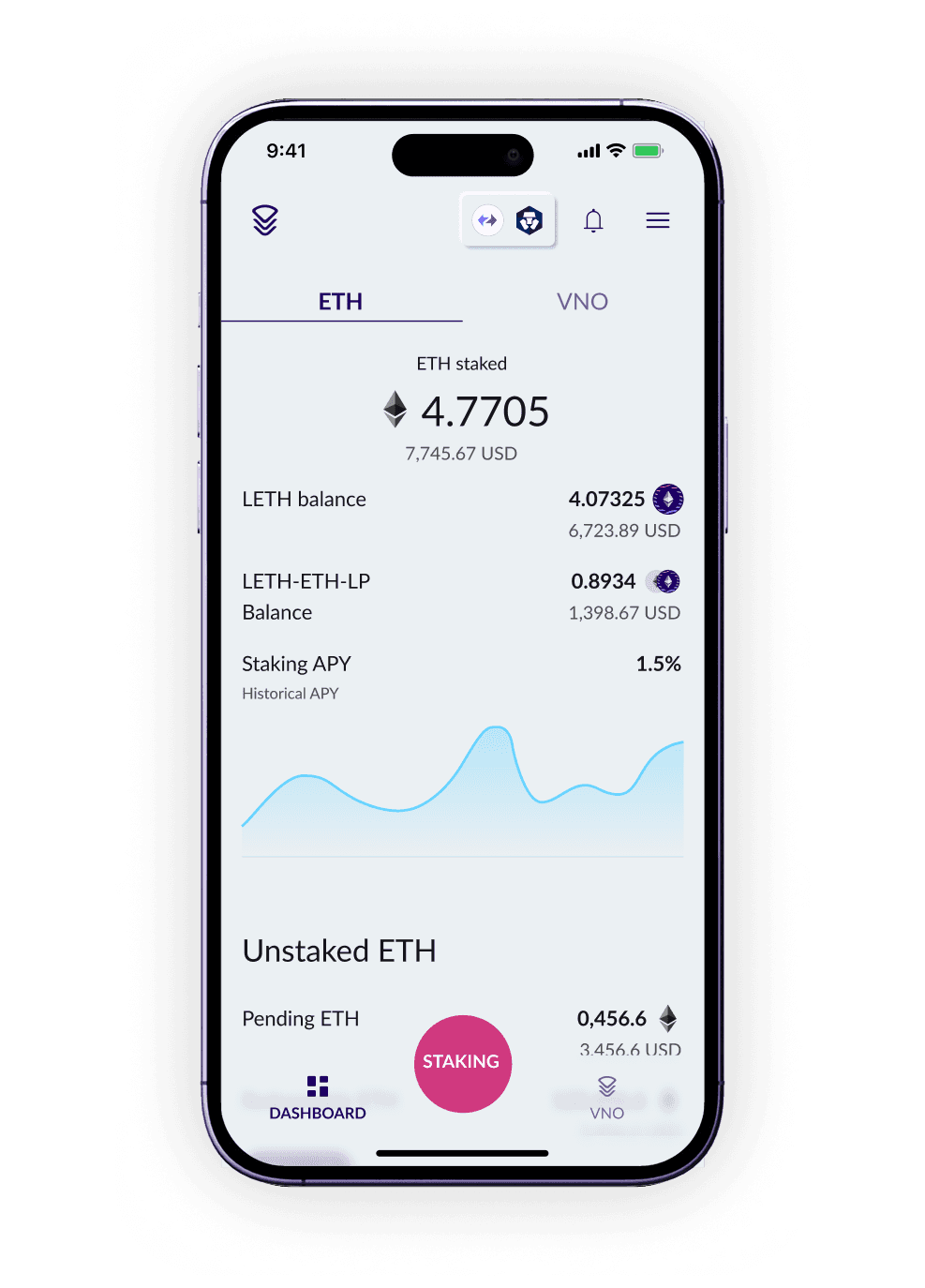
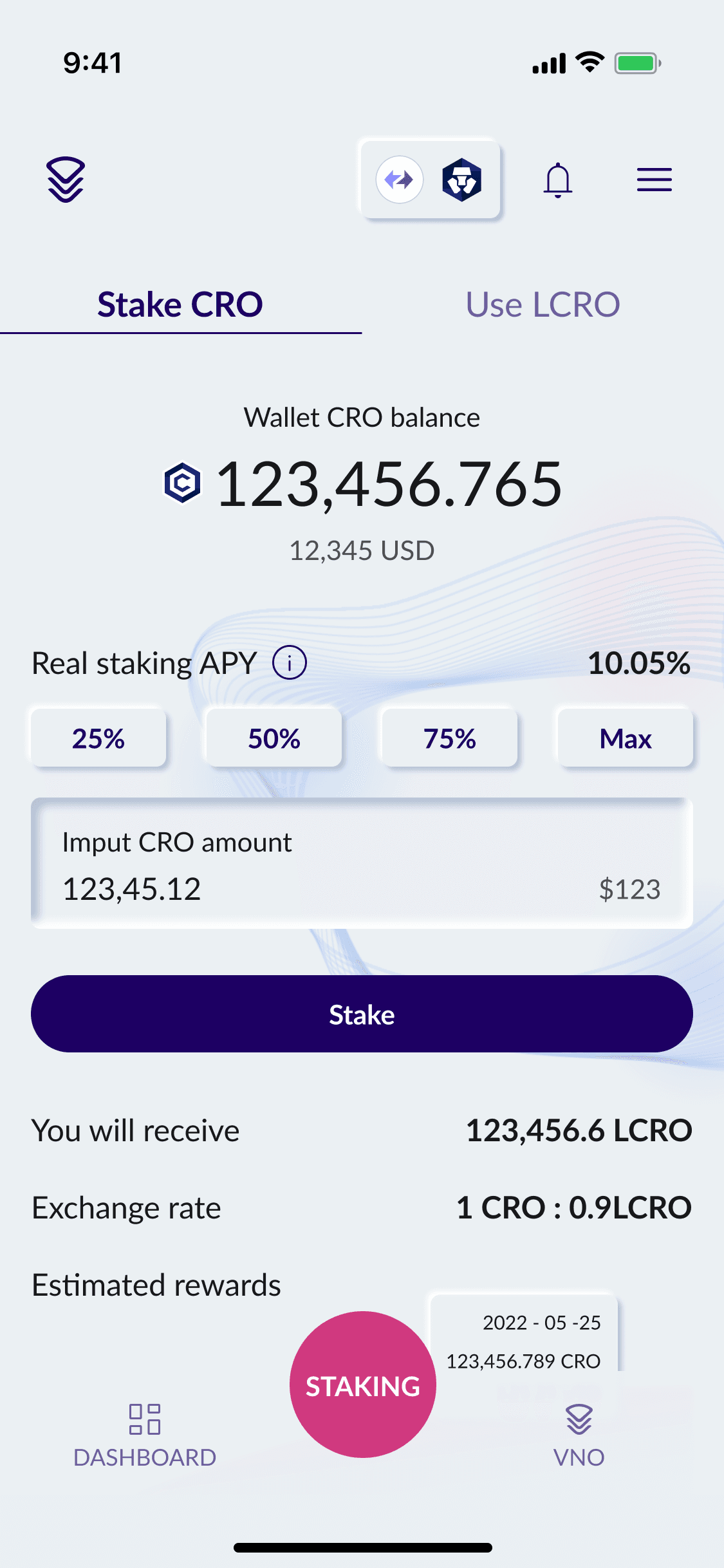
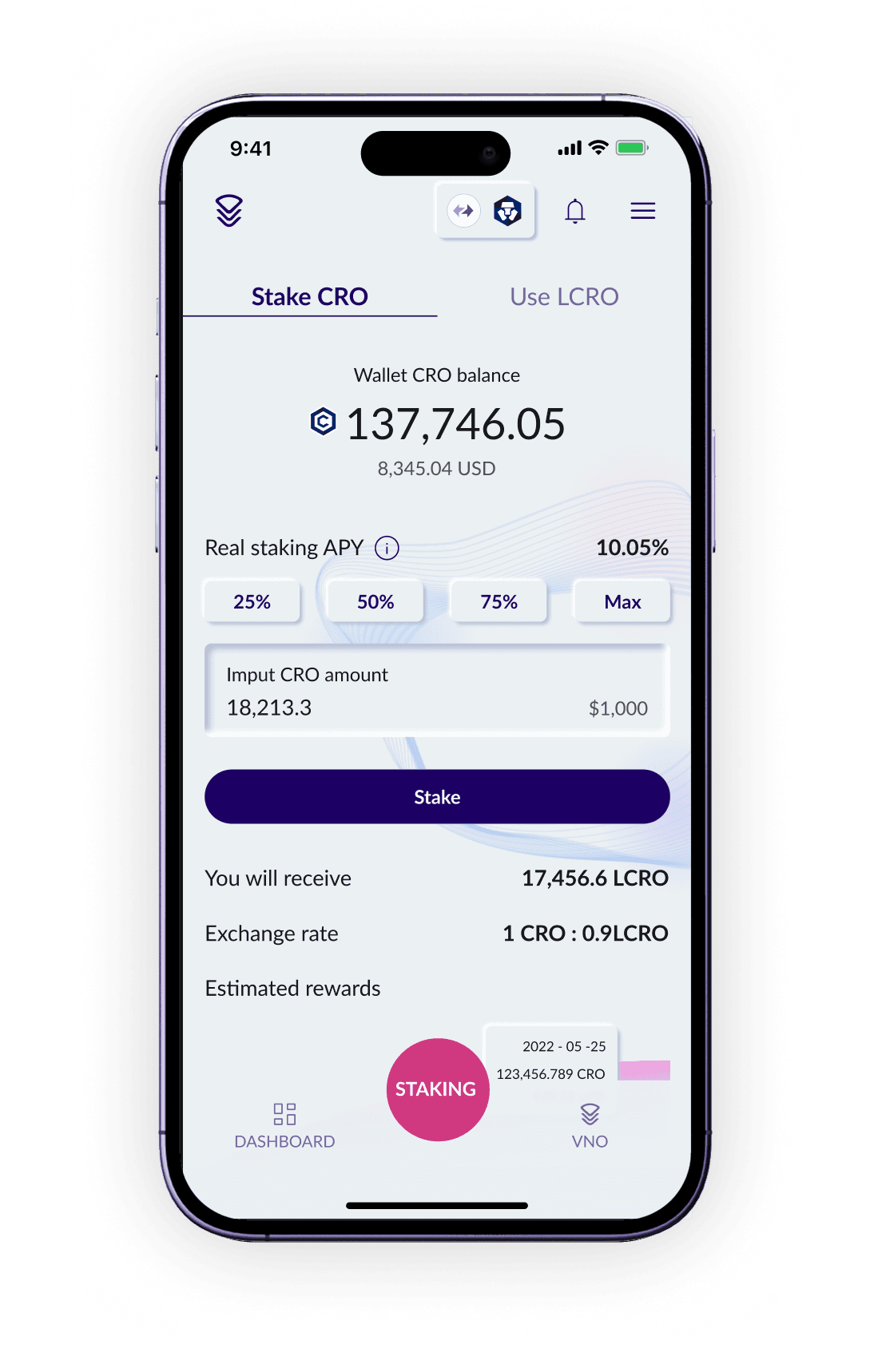
The protocol's main screen. Users stake CRO, ETH, ATOM or TIA and instantly receive the matching liquid receipt token.
Use
Use
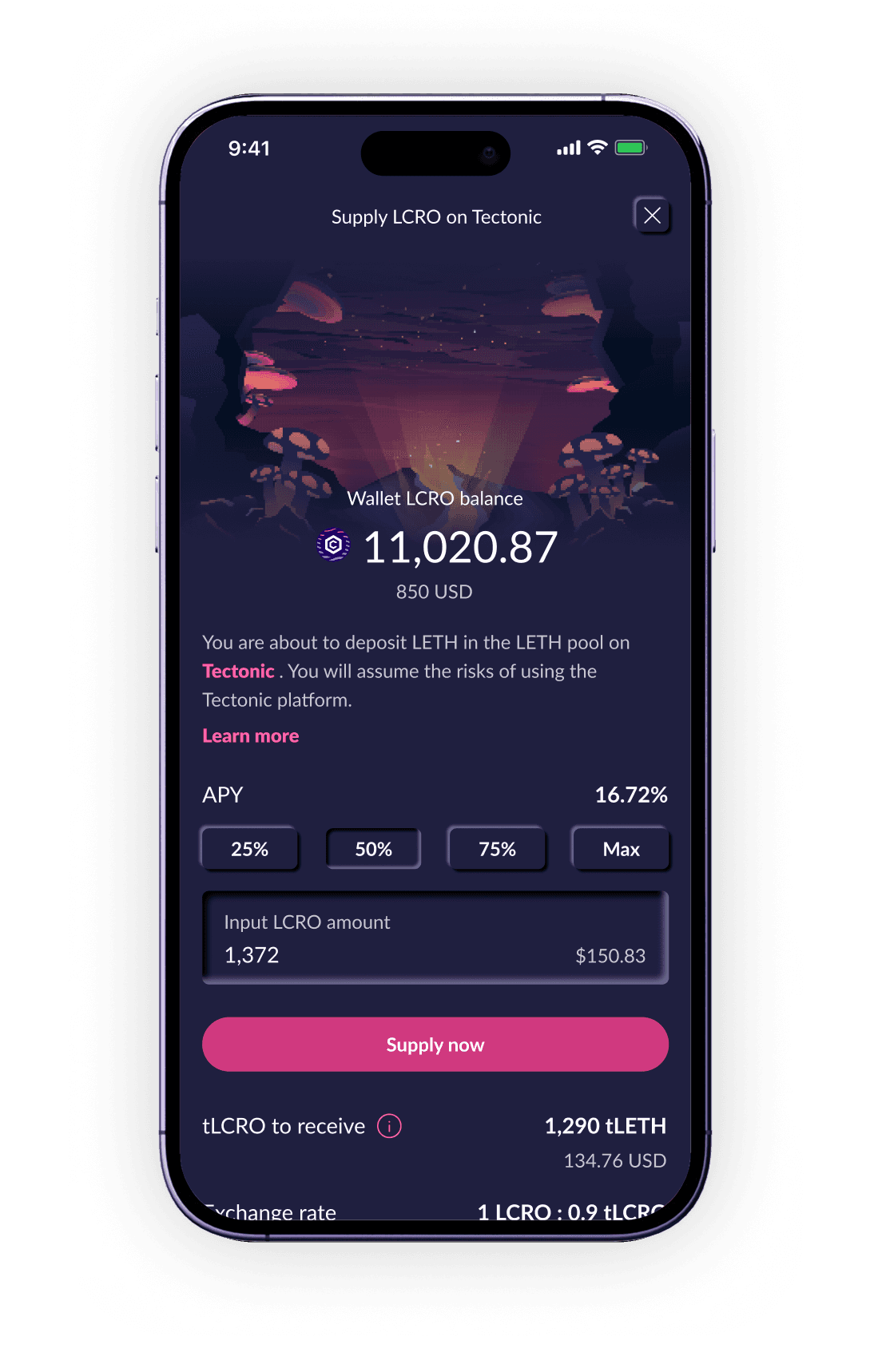
Deploy the liquid receipt token across Veno's Cronos partners Tectonic, Ferro, VVS and receive a tToken or an LP token in return.
Dashboard
Dashboard
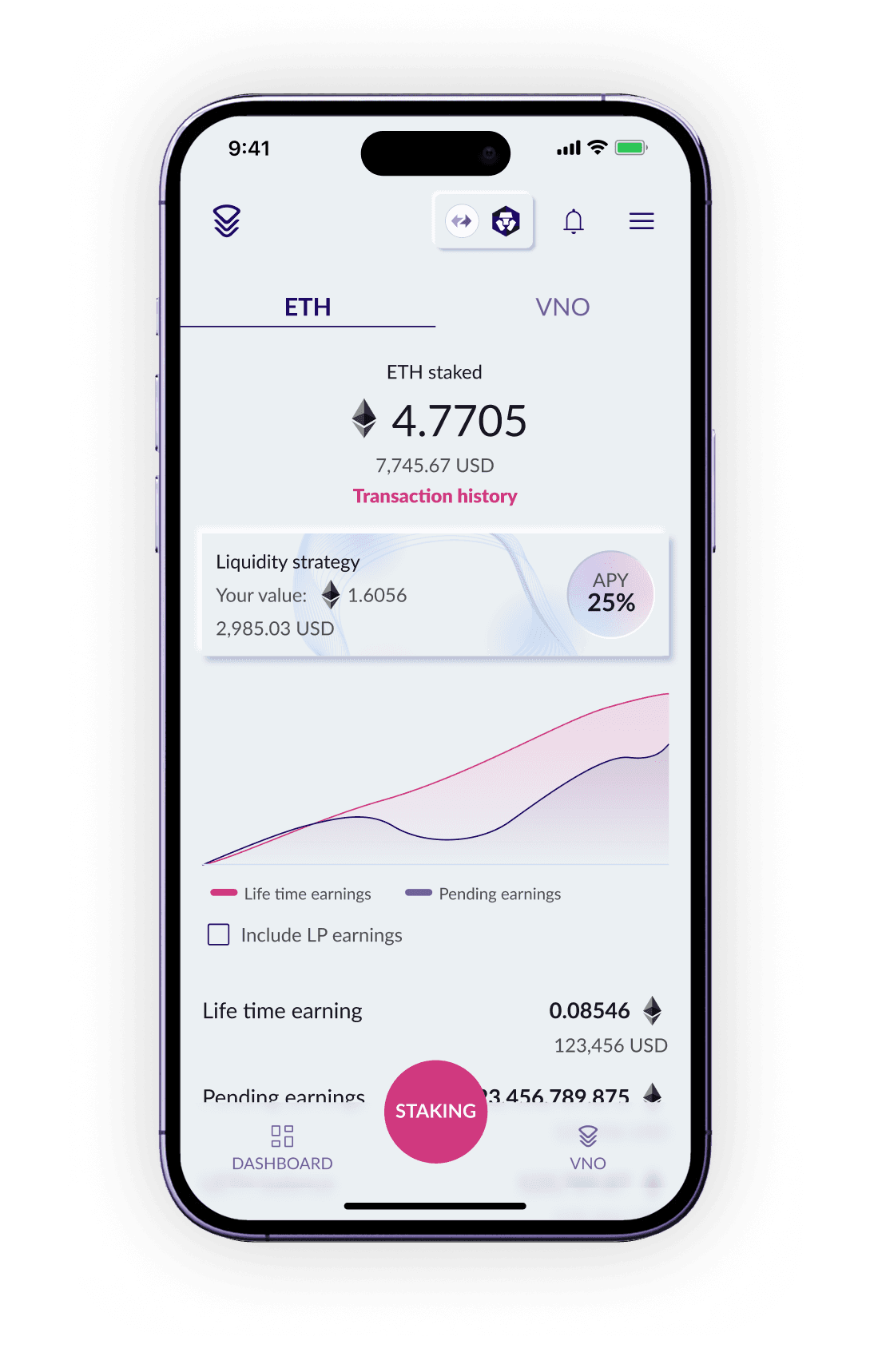
Track every staked position and its rewards on one screen, split between lifetime earnings and pending payouts.
VNO utility
VNO utility
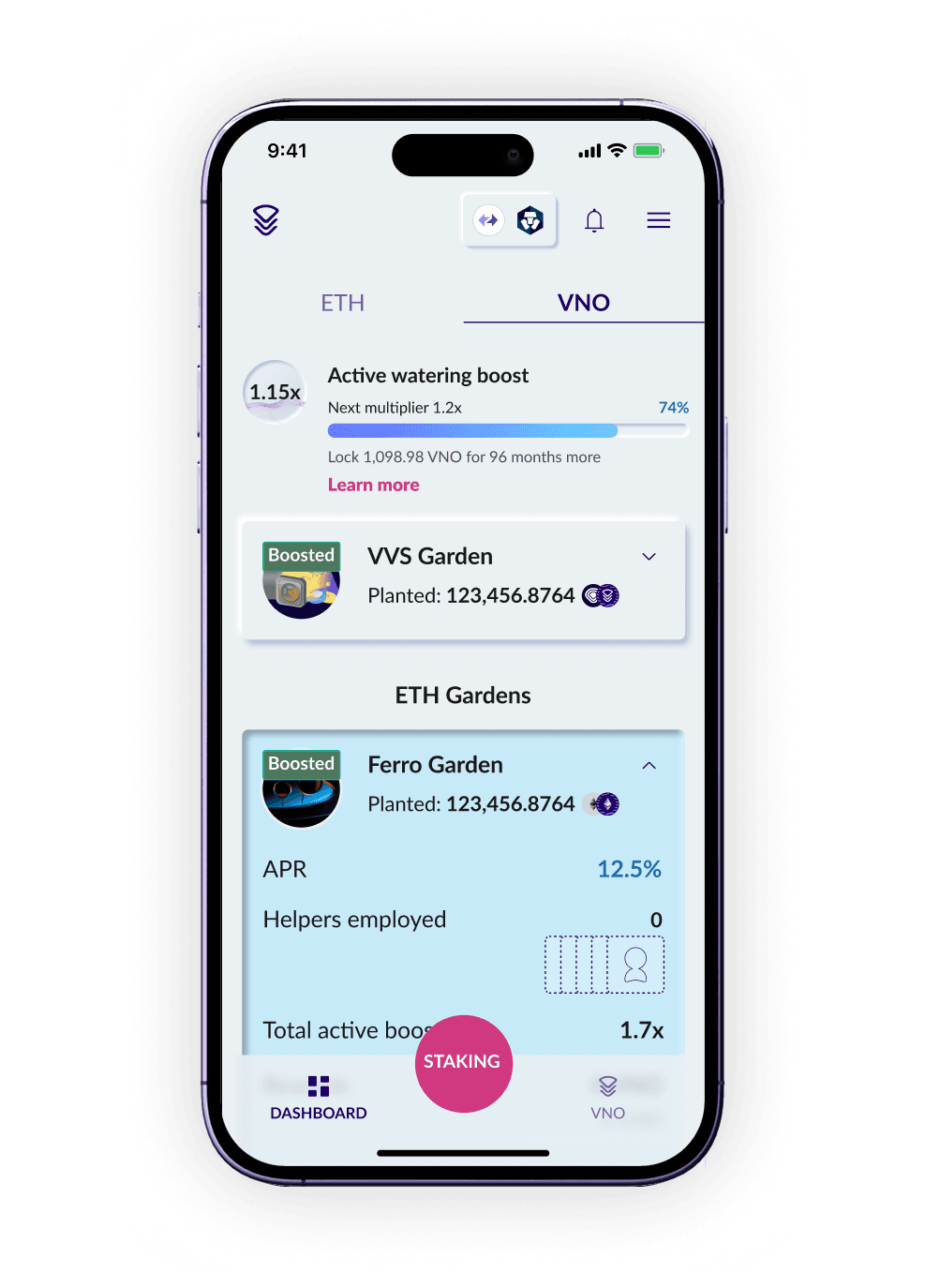
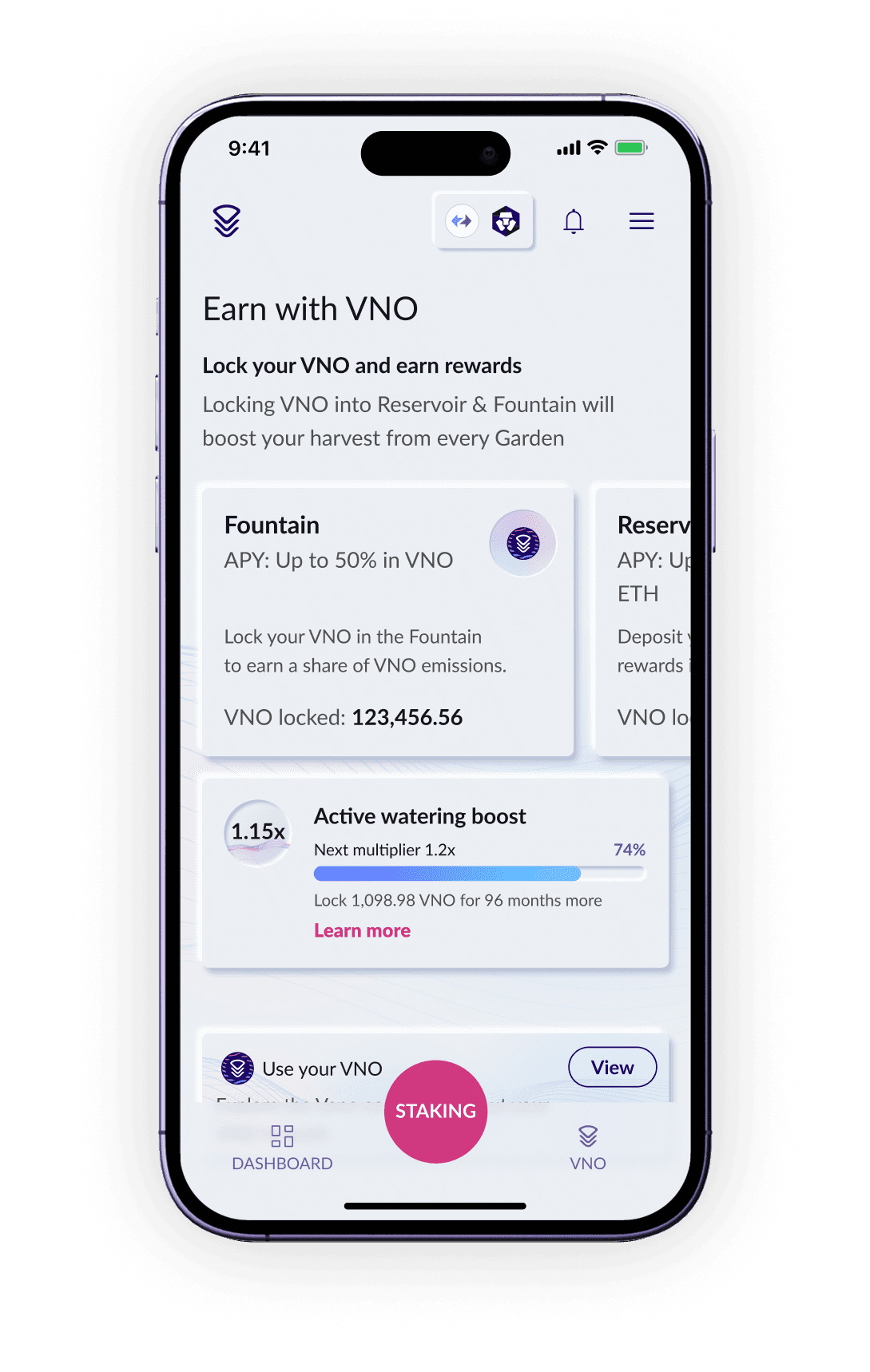
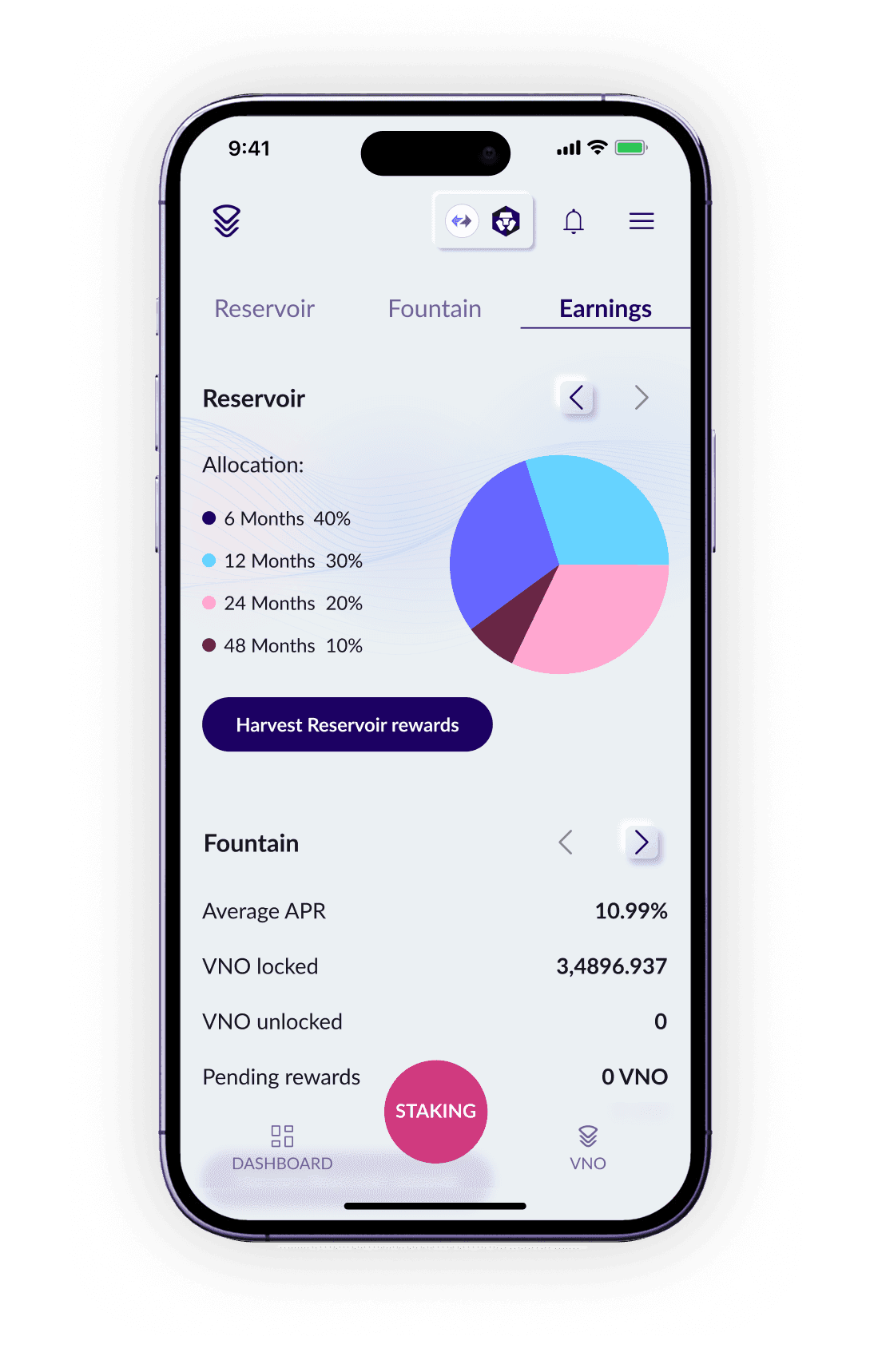
The protocol token explainer. Locking VNO into Reservoir or Fountain triggers a watering boost that multiplies harvests across every Garden.
Maturity vaults
Maturity vaults
Lock VNO into a Reservoir or Fountain vault and earn rewards in CRO, ATOM, ETH or TIA, each duration sits in its own card with APR and multiplier exposed.
VNO dashboard
VNO dashboard
The aggregate view of a user's VNO: distribution by lock duration, average APR, locked and unlocked balances, and one tap to harvest everything claimable.
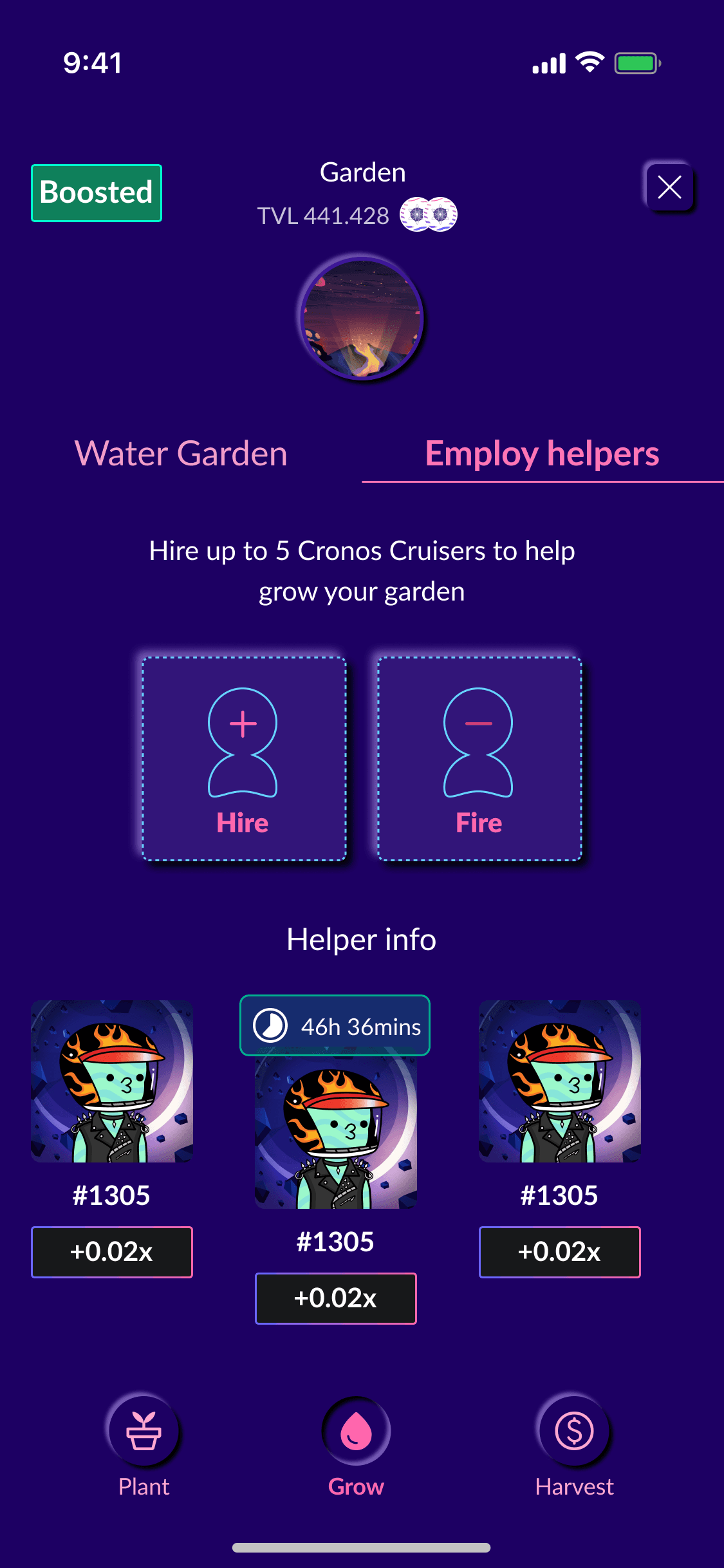
Veno Gardens
Veno Gardens
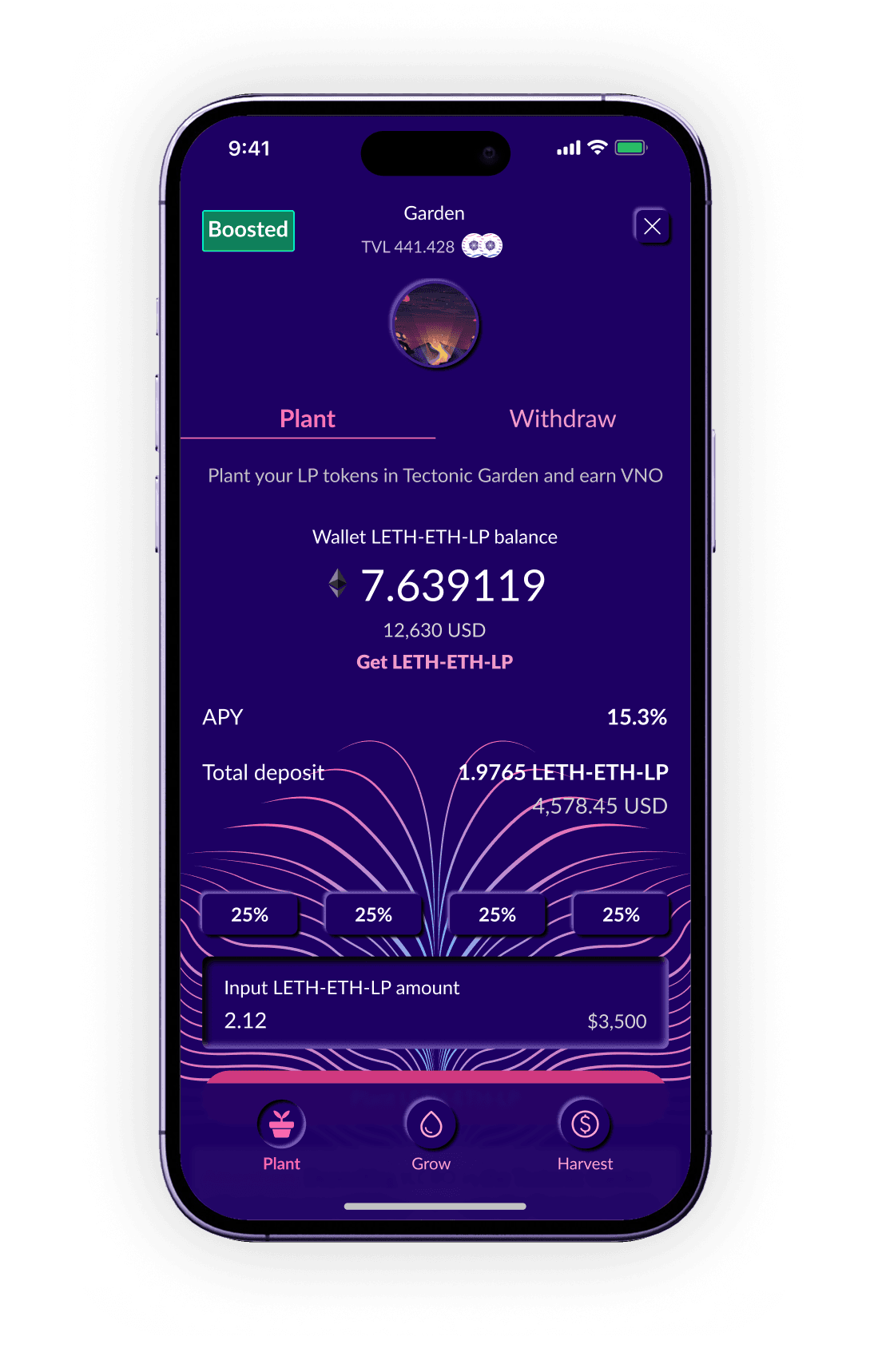
Plant tTokens or LP tokens to earn VNO emissions, Grow stakes employee NFTs to multiply APR, Harvest claims the rewards.
Explore other projects

Explore other projects
Project agenda
Problem statement
Before Veno, staking meant locking your tokens so the journey ended there and liquidity stopped moving through the ecosystem. We needed a way for users to earn staking rewards and keep their assets usable. That led to liquid staking: users stake, receive a token receipt, and can continue using it across other protocols.
Pipeline
Define the core journey and mental model → prototype key moments → test comprehension and usability → iterate into an MVP for build.
Timeline
10 weeks to complete the project, including research, design, and testing.
Delivery plan
Make “what you get” clear before committing, explain the liquid token in plain language, and centralise rewards + status in a single dashboard so users always know where to look.
Outcome & Impact
Veno launched on Cronos mainnet, contributing to sustained growth over time.
(Current metrics as of today)
$25M+
in total value locked
17,000+
users onboarded
$775K+
in rewards distributed
Outcome & Impact
Veno launched on Cronos mainnet, contributing to sustained growth over time.
(Current metrics as of today)
$25M+
in total value locked
17,000+
users onboarded
$775K+
in rewards distributed
Why this mattered
Give partner protocols a composable staking primitive
Lower the barrier for users unwilling to lock funds
Give partner protocols a composable staking primitive
My role
Sole product designer, discovery to mainnet launch.
Owned: research, UX strategy, information architecture, interaction design, design QA. Partnered with: product, engineering, and Crypto.com design leadership.
On a greenfield DeFi product, leadership meant setting the mental model before setting the pixels.
Research
approach
What testing revealed
40%
Success rate
8
Participants
First-round usability testing hit a 40% success rate. Across eight participants, the failure pattern was consistent and it wasn't about the staking flow itself.
Three insights explained why:
Users needed clarity before committing funds
Liquidity was a major hesitation point
Users didn't know what to do with LCRO
What we learnt
Users weren't failing because the staking flow was broken.
They were failing because they received LCRO and had no idea what it was for.
Our initial brief was wrong. We'd framed the problem as "design a simple staking interface" but simplicity wasn't the barrier. Users couldn't trust a token whose value state changed without them, and they couldn't see its utility beyond the transaction.
The challenge wasn't interface polish. It was mental models.
Reframing the problem
The initial brief was wrong.
“How do we design a simple liquid staking interface?”
Became
How do we help users trust a token that changes value without their input and understand its utility across the ecosystem?
UX Strategy
& Product Decisions
The UX strategy focused on making liquid staking feel safe, understandable, and low-effort, especially for users who were new to DeFi.
Build confidence first. Expose complexity only when it becomes relevant.
Four principles followed:
Principle #1
Progressive disclosure of complexity
Advanced mechanics such as unstaking delays, receipt tokens, and NFT withdrawal flows were introduced only when they became relevant. This reduced cognitive load early in the journey and kept the initial staking experience focused and approachable.
Principle #2
Extended the flow beyond staking
The original flow ended at transaction success, leaving users unsure what they could do with their new token. We expanded the journey by guiding users to the next relevant actions and embedding partner protocol opportunities directly within Veno, so they could immediately use the token without leaving the platform.
Principle #3
Structured around user intent
Navigation, labels, and flows were designed around what users wanted to do or stake, track rewards, or manage assets rather than around the protocol’s internal logic. This made the product easier to navigate and reduced friction across key journeys.
Principle #4
Strengthened onboarding around staking mechanics
Users did not always understand the role of receipt tokens or why an NFT was generated during unstaking. We strengthened onboarding with clearer explanations and guidance, helping users understand what these assets were, why they appeared, and what to do with them next.
Solution
Staking screen
Dashboard
VNO token
Locking Vaults
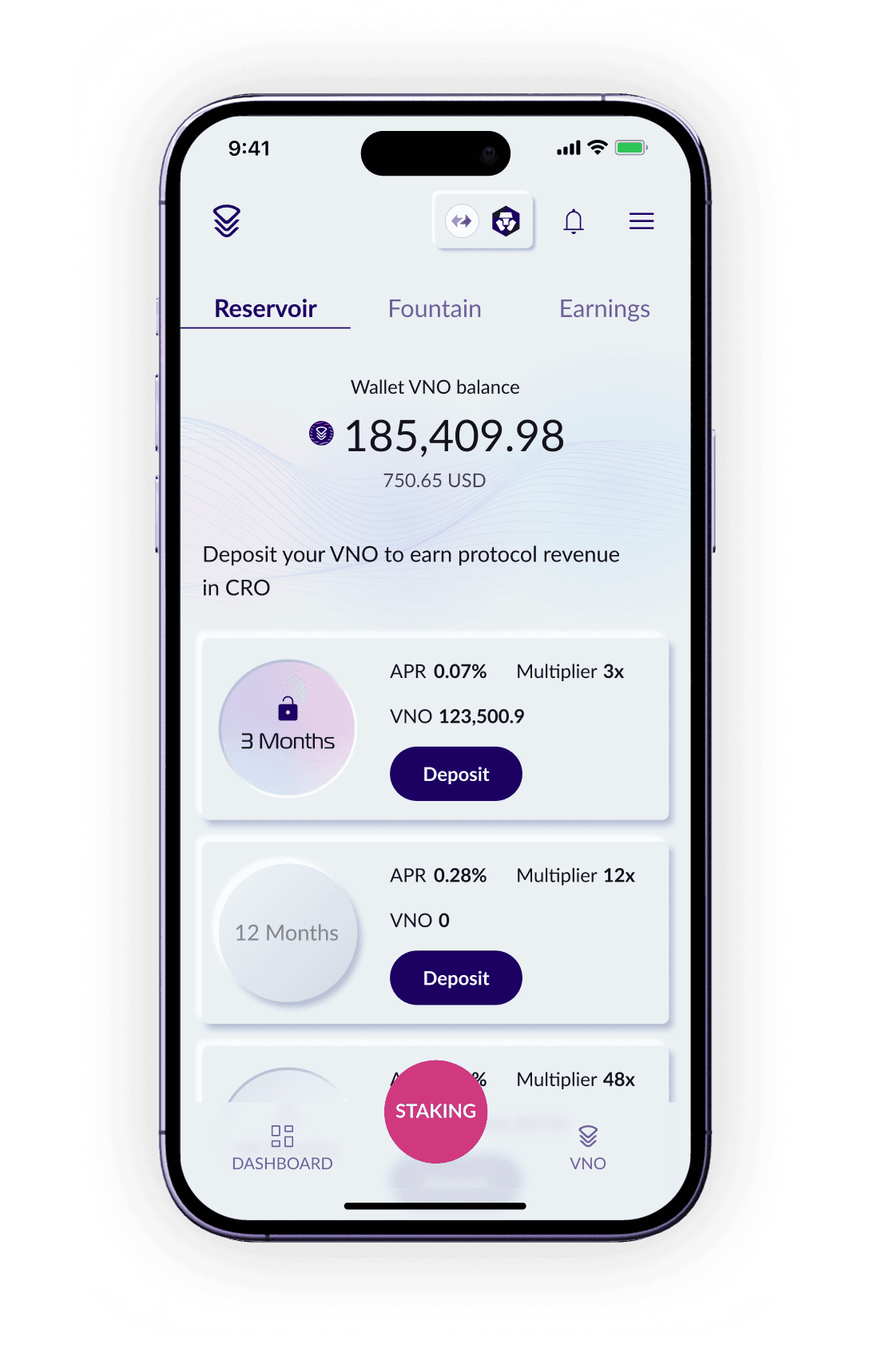
Vaults Dashboard
Use LCRO
Veno Garden
Outcome & Impact
The MVP laid the groundwork for a scalable liquid staking experience, contributing to sustained growth over time.
(Current metrics as of today)

Metrics
$25M+
in total value locked
Metrics
17,000+
users onboarded
Metrics
$775K+
in rewards distributed
Enabling Liquid
Staking on Cronos
Zero-to-one
Web 3
Veno is a liquid staking protocol on Cronos. It lets users earn staking rewards while keeping their tokens usable across DeFi.
The real design challenge wasn't interface. It was trust in a system whose value state changes without the user touching it.