Soho Health Club, Native Booking Experience
UX Strategy
MVP
iOS
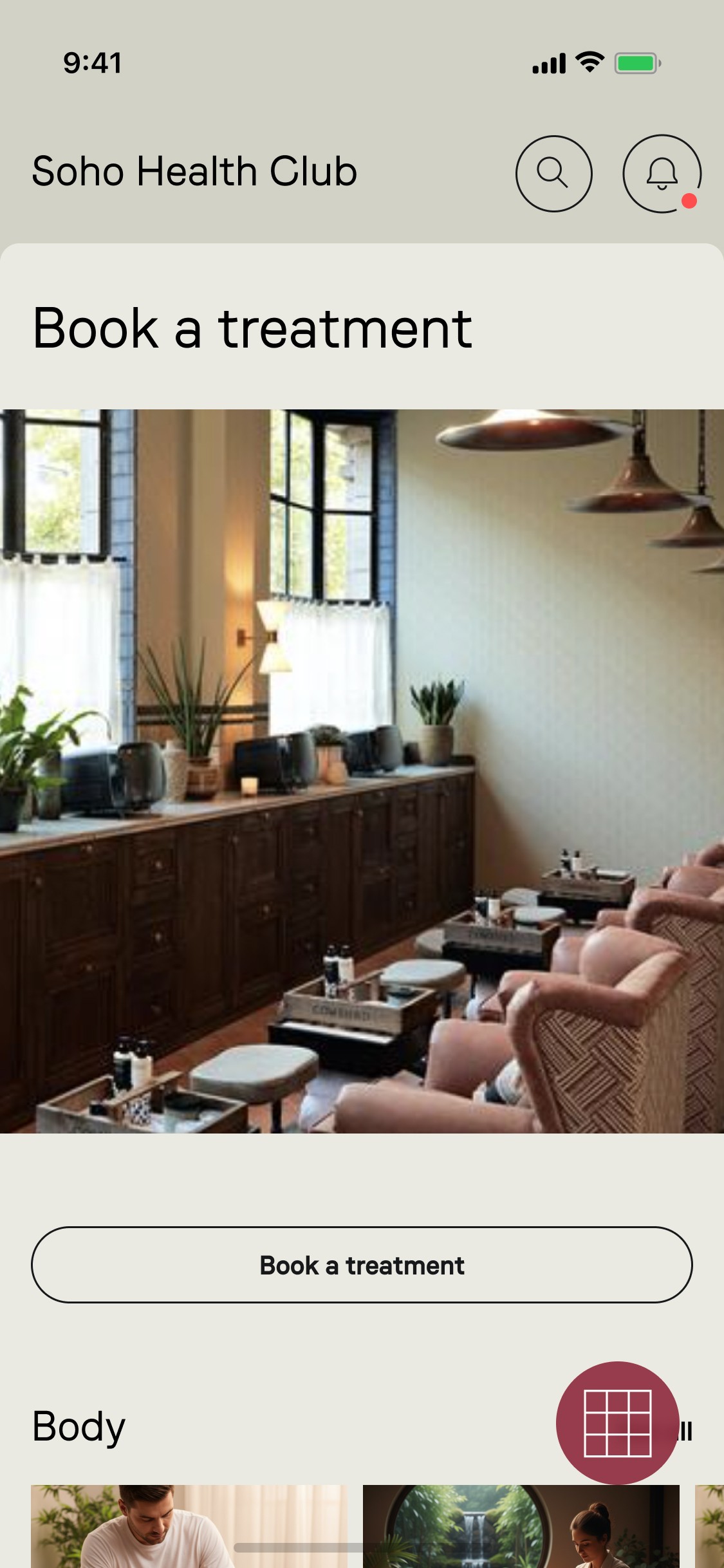
Soho House's first native iOS booking flow, replacing staff-led scheduling with self-serve planning for spa and wellness services. This project was the proof of concept for a brand new membership type, Soho Health Club, designed to scale across all Houses.

Outcome & Impact
80%+
of bookings handled through the app within weeks of launch
3
months from London pilot to worldwide rollout across all Houses
Full capacity spa services fully booked post-launch, directly accelerating the Soho Health Club membership launch
Results
Members could self-serve for the first time, no staff required
Members could self-serve for the first time, no staff required
Full visit planning in a single, coherent journey
Full visit planning in a single, coherent journey
The complete treatment catalogue, surfaced and browsable
The complete treatment catalogue, surfaced and browsable
Operational overhead reduced for house teams
Operational overhead reduced for house teams
My role
I was the sole designer on the project, embedded with Product, Engineering, and Insights. I owned the design lifecycle from discovery through launch, ran the research synthesis, and partnered on the UX strategy to make sure the experience could scale as new Health Club offerings rolled out across all Houses.
The challenge
Soho House's health club services were booked manually, through staff conversations. Members had limited visibility into the full range of treatments, the experience didn't reflect the Soho House standard, and operational load on house teams was high.
We had 8 weeks to ship a native iOS MVP that let members self-serve across all Houses, and to make the case for launching Soho Health Club as a new membership tier.
Research approach
Member
interviews
Staff
shadowing
Booking
scenario review
Repeat
booking analysis
User interview insights
Multi-service visits were the default
Service discovery relied on staff
Changes created disproportionate friction
Members planned visits, not bookings
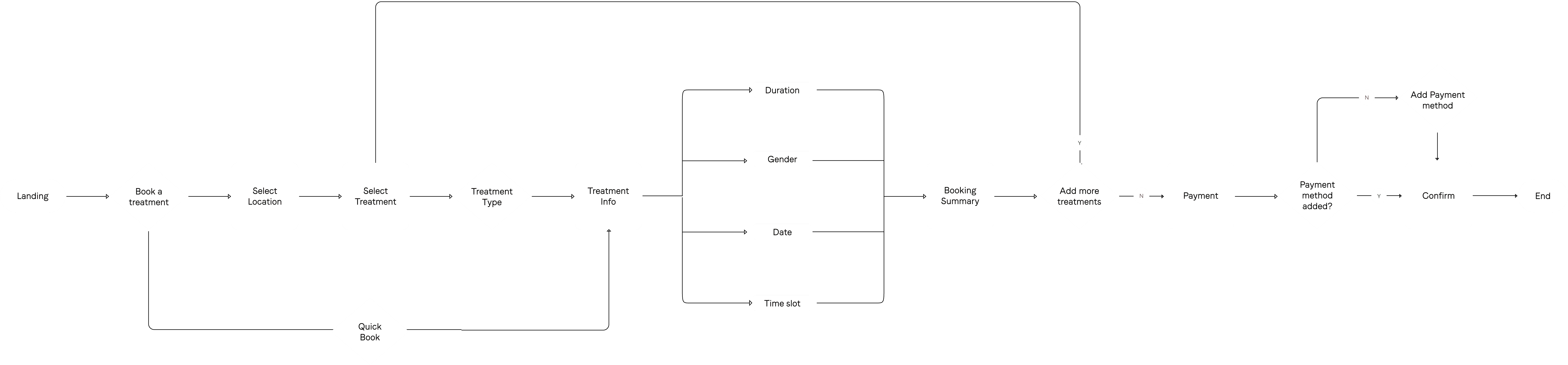
Information Architecture & Core Flow
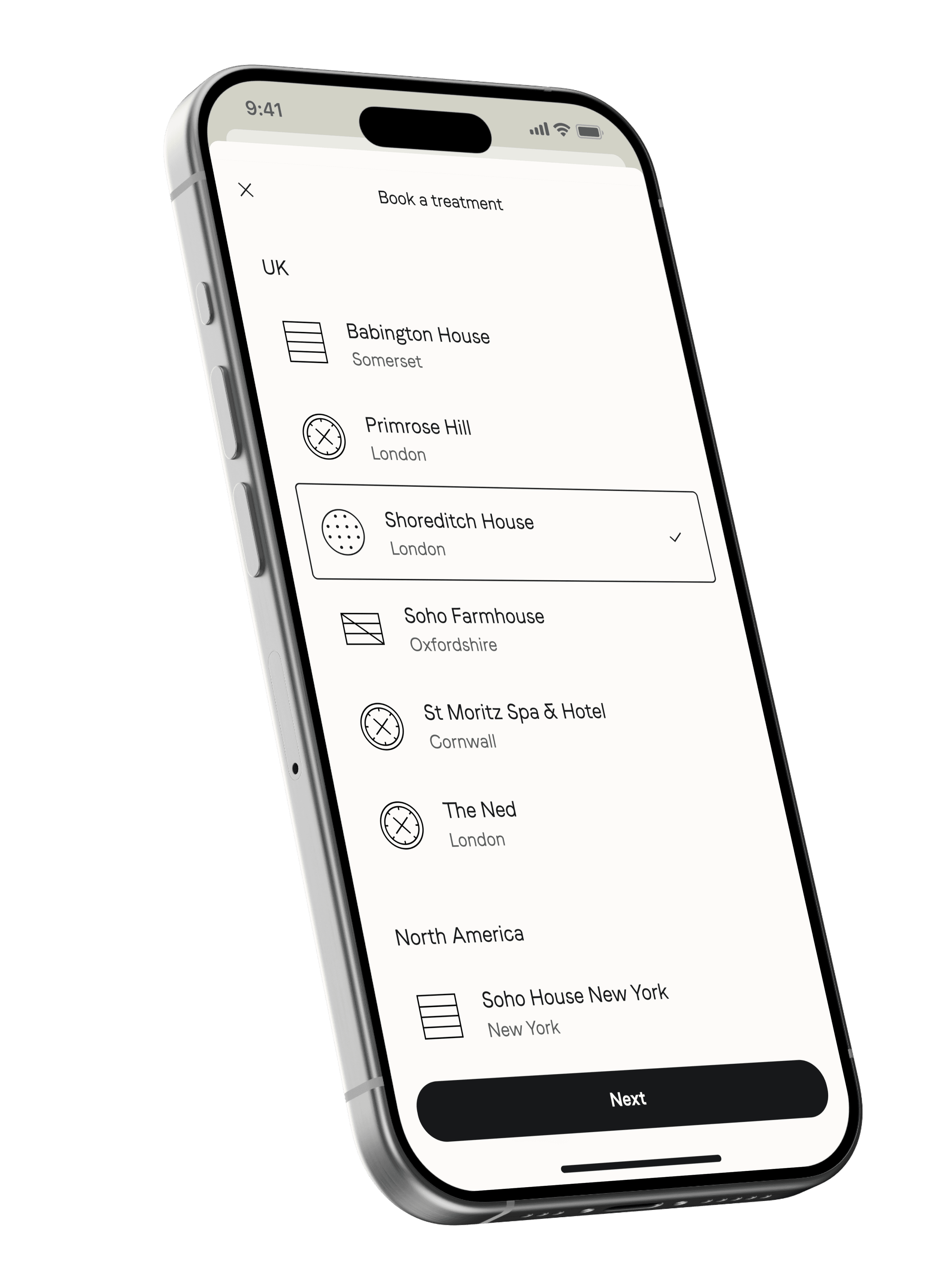
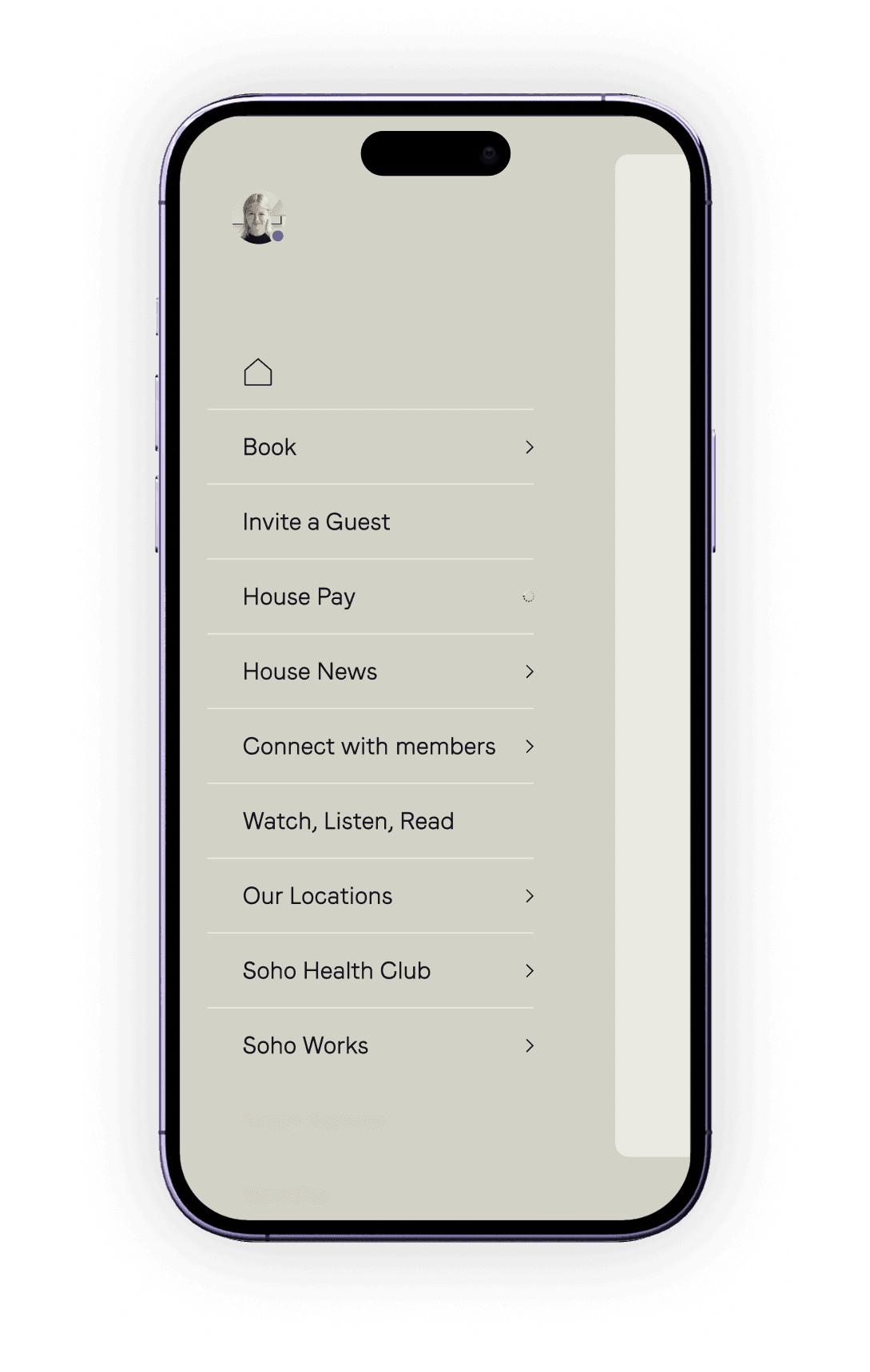
The booking journey was structured around how members plan Health Club visits, rather than how bookings were previously handled operationally.
This structure enabled members to explore services, build a personalised visit, and manage availability in one continuous flow, reducing uncertainty and eliminating the need for back-and-forth coordination.
User test results
80%
80%
Satisfied response
11
Participants London
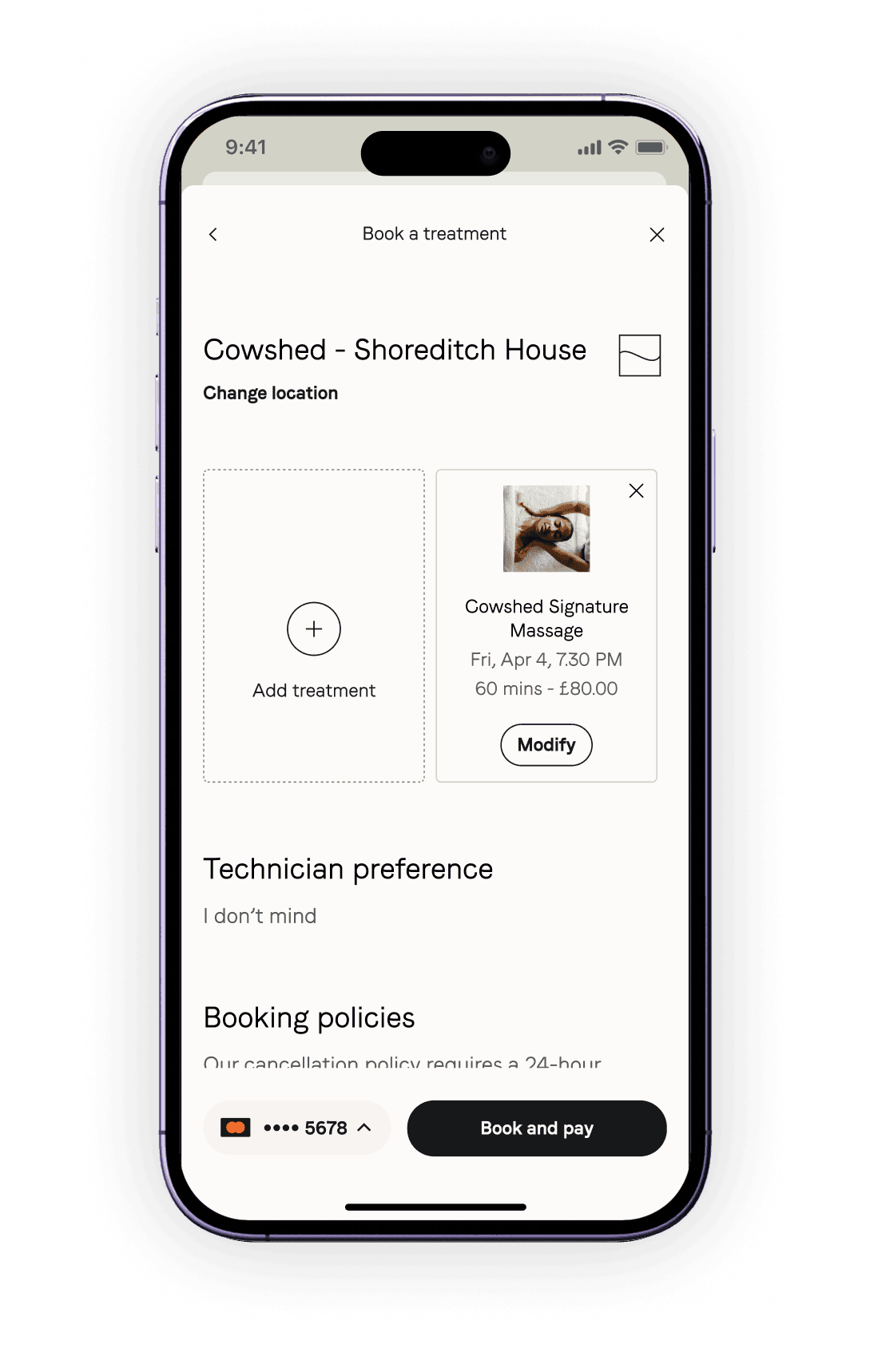
Friction clustered around multi-service visits. When members added a second treatment, the first disappeared from view and they lost track of what was already booked. In response, we added a persistent banner at the top of the flow surfacing active bookings, which shipped in the MVP.
Design decisions
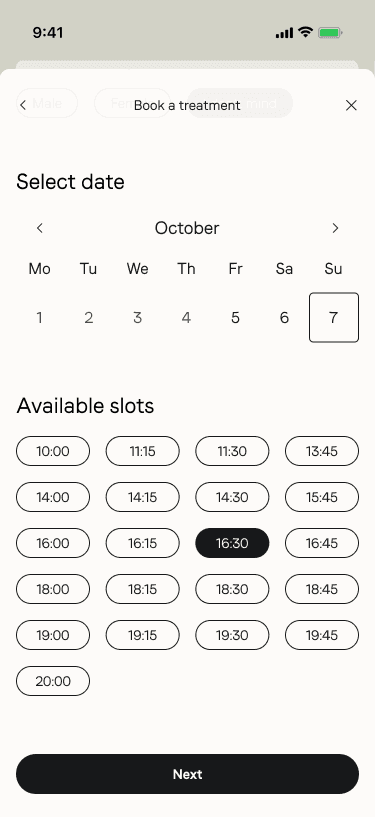
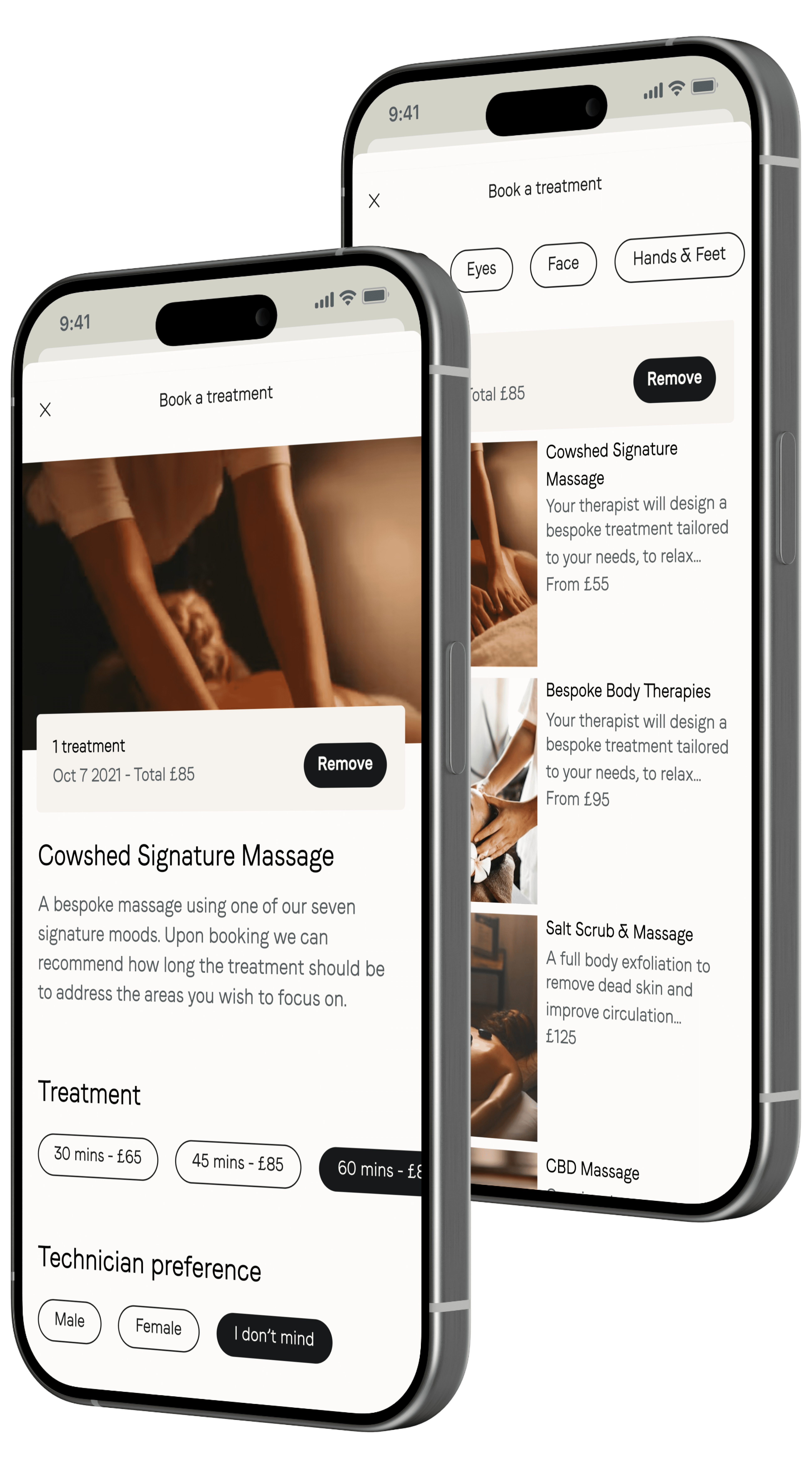
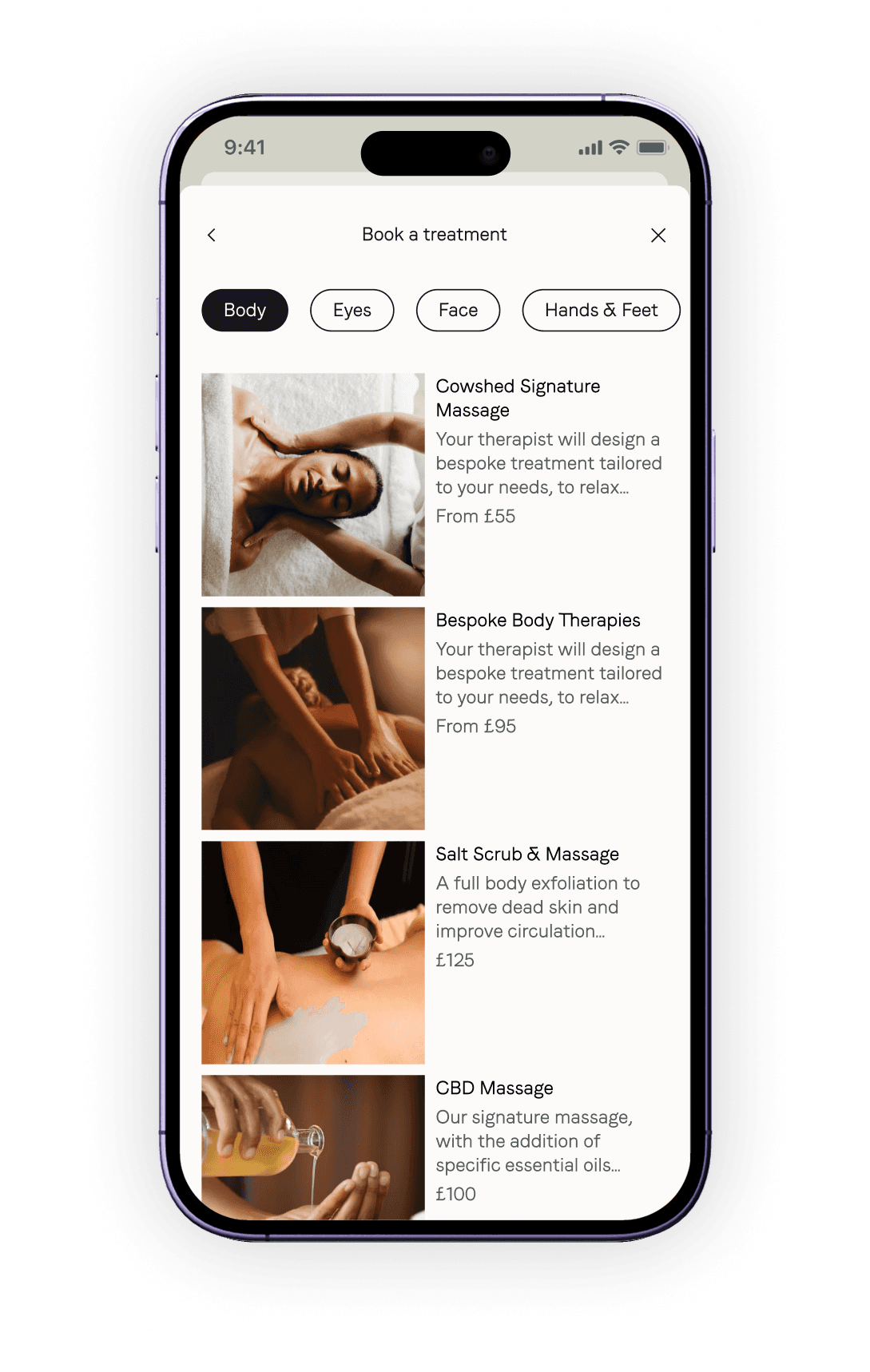
Surface the full treatment catalogue by category, not just a search field discovery was the first barrier, not booking.
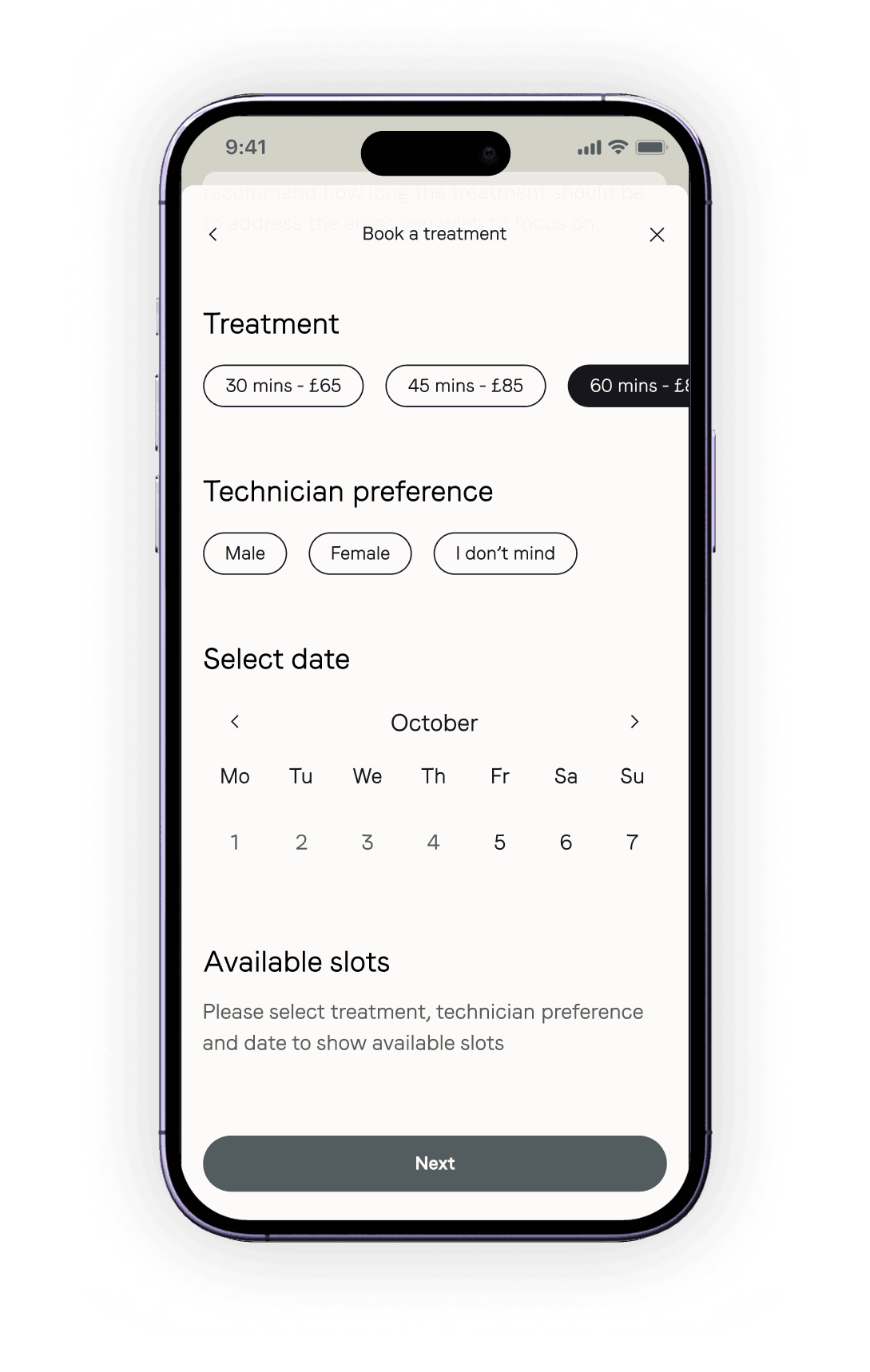
Let members build multi-service visits in one flow, so a spa + gym + lunch trip didn't require three separate bookings.
Keep changes non-destructive rescheduling or swapping a service never meant restarting the flow.
SHC Landing
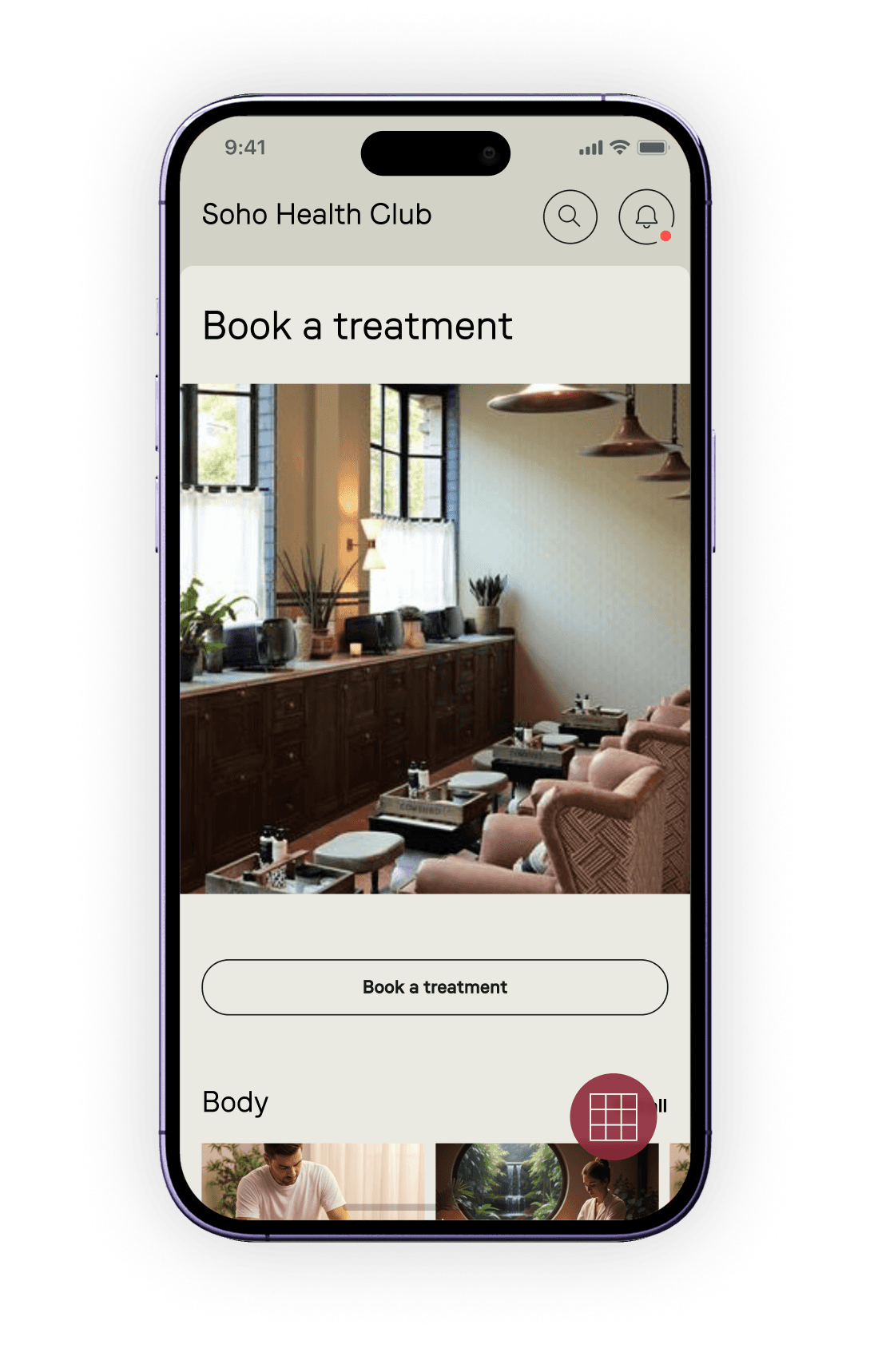
FAB menu
Treatment list
Treatment selection
Booking summary
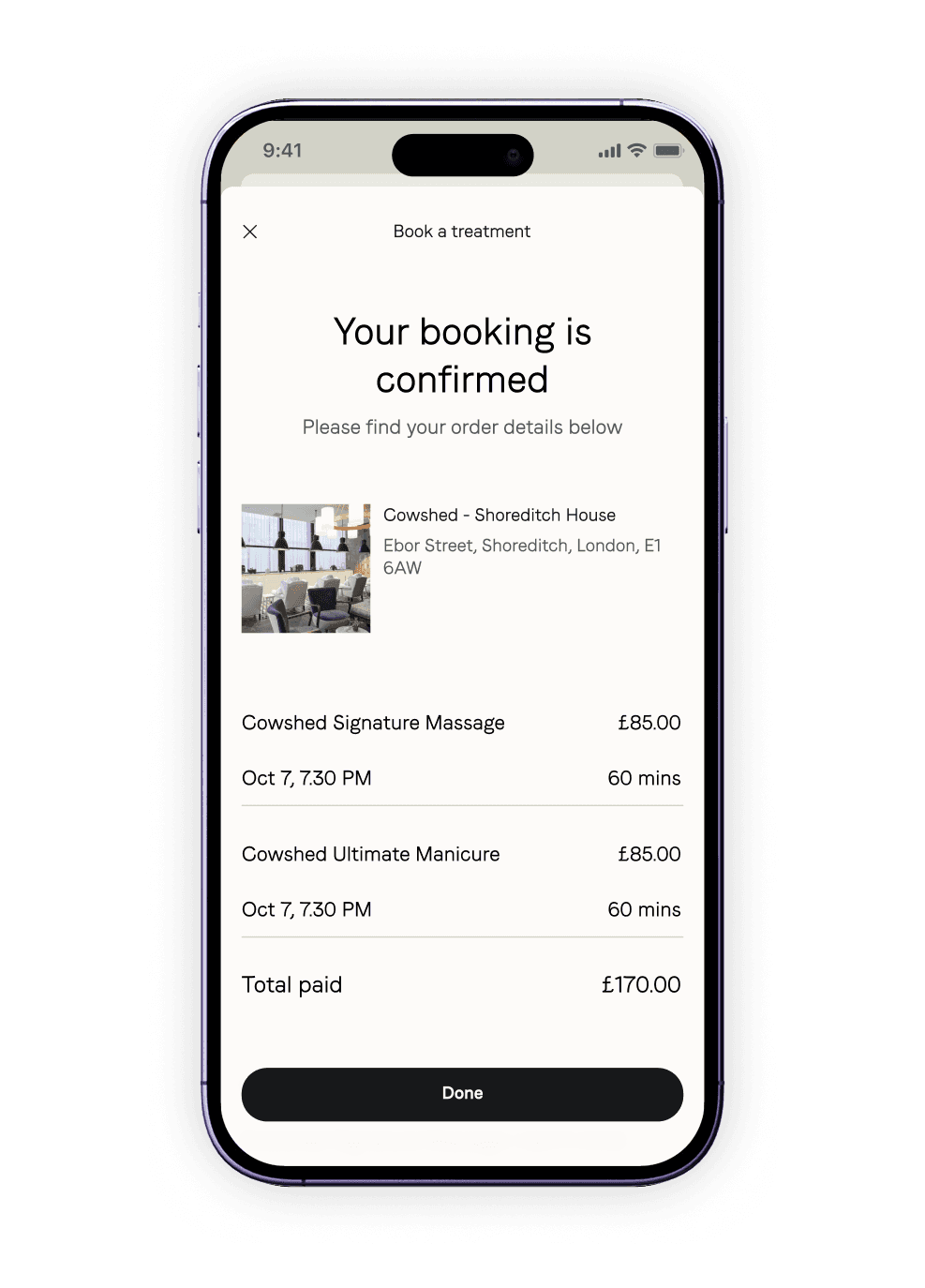
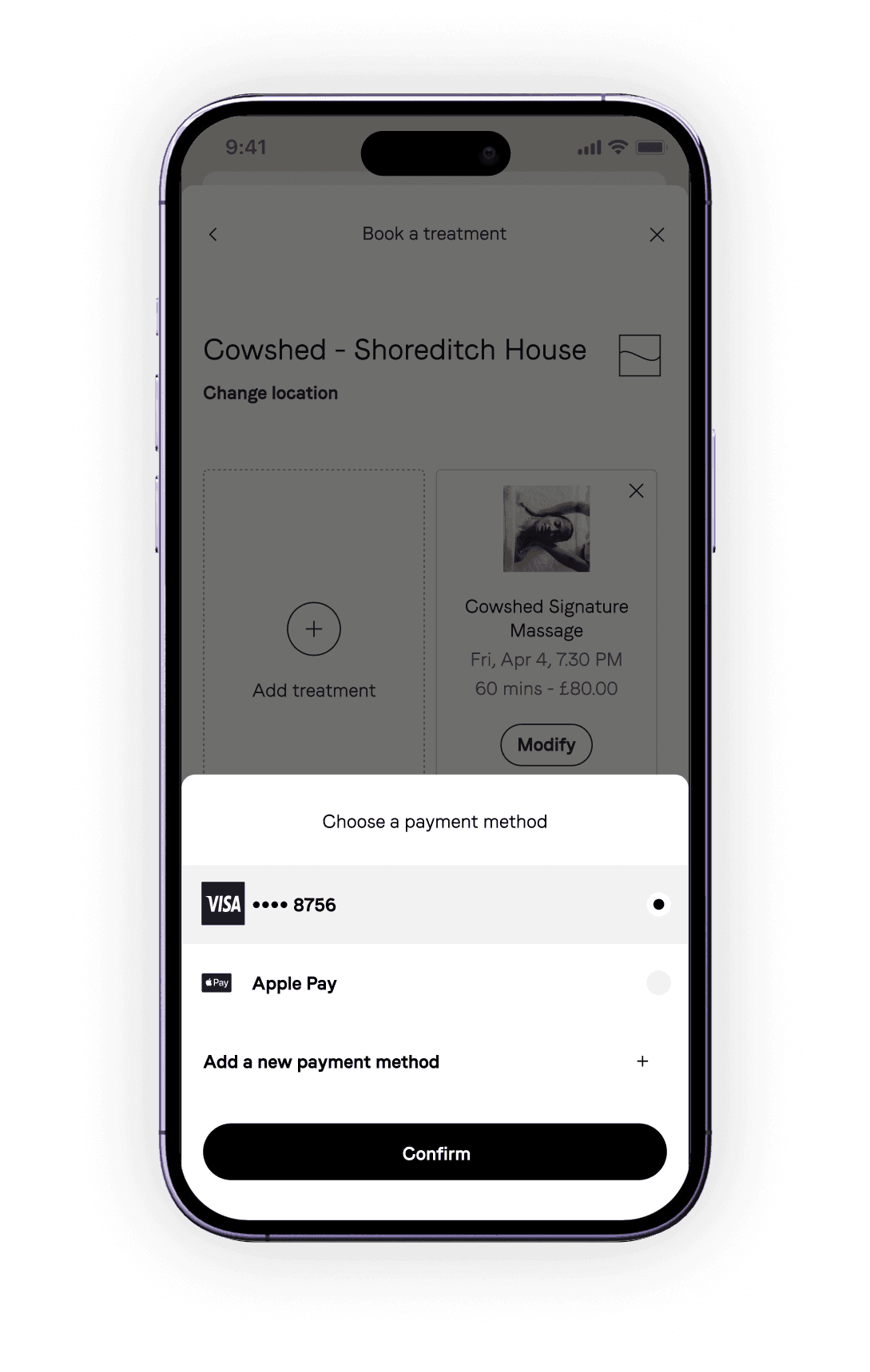
Payment modal
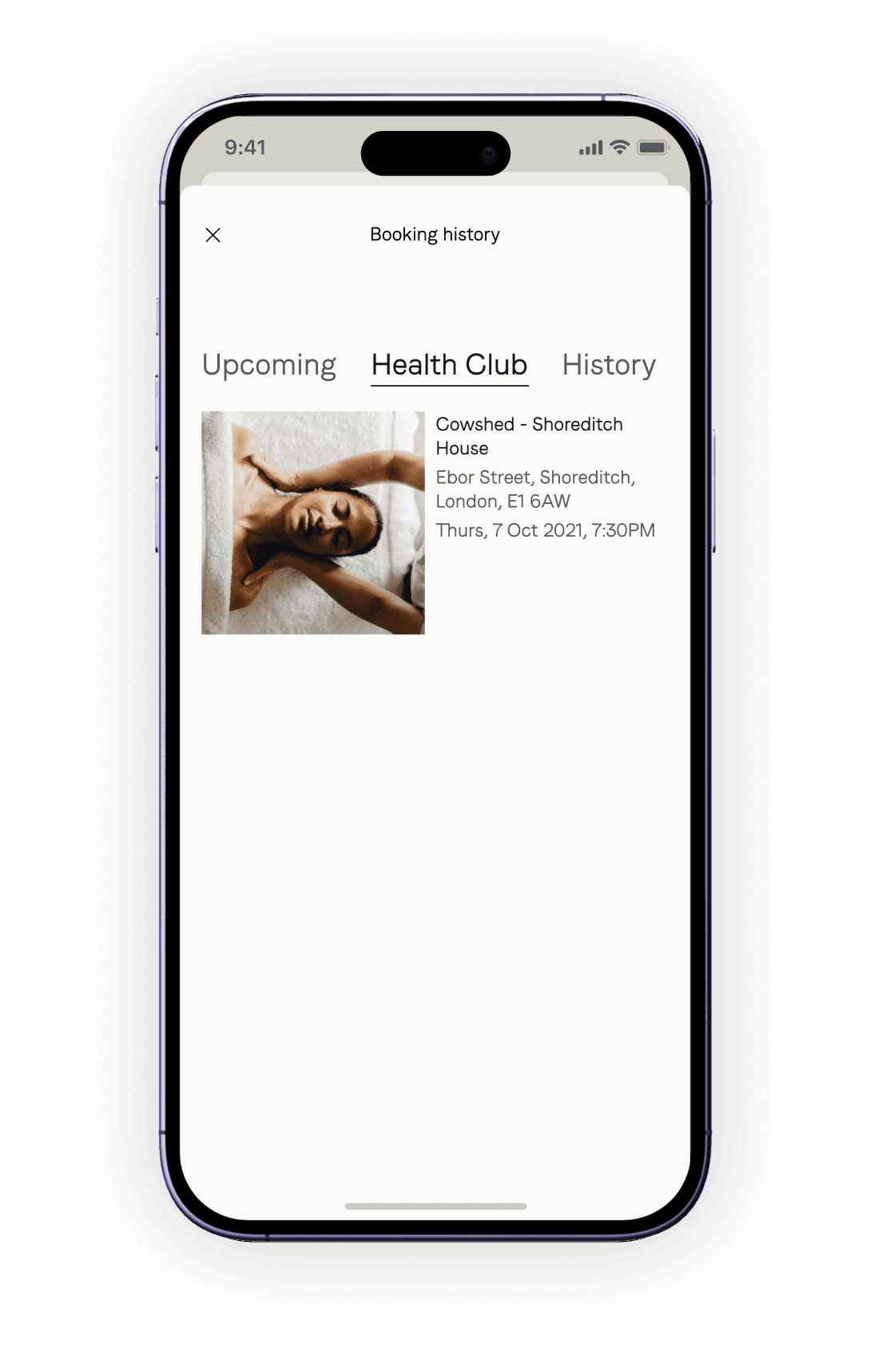
Booking list
SHC Landing
FAB menu
Treatment list
Treatment selection
Booking summary
Payment modal
Booking list
Explore other projects
Soho Health Club, Native Booking Experience
UX Strategy
MVP
iOS
Soho House's first native iOS booking flow, replacing staff-led scheduling with self-serve planning for spa and wellness services. This project was the proof of concept for a brand new membership type, Soho Health Club, designed to scale across all Houses.
Project agenda
Problem statement
The room booking experience relied on a third-party hotel platform that felt confusing and lacked key details, especially around total price and payment expectations. It was also costly to maintain and didn’t reflect the premium Soho House experience.
Pipeline
Map where confidence drops, simplify the end-to-end flow, then validate the new structure through quick prototypes and usability testing.
Timeline
12 weeks to complete the project, including research, design, and testing.
Delivery plan
Bring price transparency earlier (total + fees), clarify payment timing, standardise policies/availability across Houses, and strengthen review + confirmation states to reduce abandonment.
Outcome & Impact
80%+
of bookings handled through the app within weeks of launch
3
months from London pilot to worldwide rollout across all Houses
Full capacity spa services fully booked post-launch, directly accelerating the Soho Health Club membership launch
Outcome & Impact
80%+
of bookings handled through the app within weeks of launch
3
months from London pilot to worldwide rollout across all Houses
Full capacity spa services fully booked post-launch, directly accelerating the Soho Health Club membership launch
Results
Members could self-serve for the first time, no staff required
Full visit planning in a single, coherent journey
The complete treatment catalogue, surfaced and browsable
Operational overhead reduced for house teams
My role
Lead Product Designer, embedded with Product, Engineering, and Insights. I owned the full design lifecycle, from discovery and research synthesis through to interaction design, prototyping, and launch, and helped define the UX strategy to ensure the experience could scale as new Health Club offerings were introduced.
The challenge
Soho House's health club services were booked manually, through staff conversations. Members had limited visibility into the full range of treatments, the experience didn't reflect the Soho House standard, and operational load on house teams was high.
We had 8 weeks to ship a native iOS MVP that let members self-serve across all Houses, and to make the case for launching Soho Health Club as a new membership tier.
Research approach
Member interviews
Staff shadowing
Booking scenario review
Repeat booking analysis
User interview insights
Multi-service visits were the default
Service discovery relied on staff
Changes created disproportionate friction
Members planned visits, not bookings
Information Architecture & Core Flow
The booking journey was structured around how members plan Health Club visits, rather than how bookings were previously handled operationally.
This structure enabled members to explore services, build a personalised visit, and manage availability in one continuous flow, reducing uncertainty and eliminating the need for back-and-forth coordination.
Design decisions
Built on Soho House's existing design system for layout, typography, and interaction patterns. I partnered with the Creative team to define the art direction for Health Club imagery, establishing photography guidelines that distinguished the Health Club offering while keeping it within the broader brand.
SHC Landing
FAB menu
Treatment list
Treatment selection
Booking summary
Payment modal
Booking list
User test results
Friction clustered around multi-service visits. When members added a second treatment, the first disappeared from view and they lost track of what was already booked. In response, we added a persistent banner at the top of the flow surfacing active bookings, which shipped in the MVP.
80%
Satisfied response
11
Participants
London