User Research
Acquisition
Conversion


The challenge
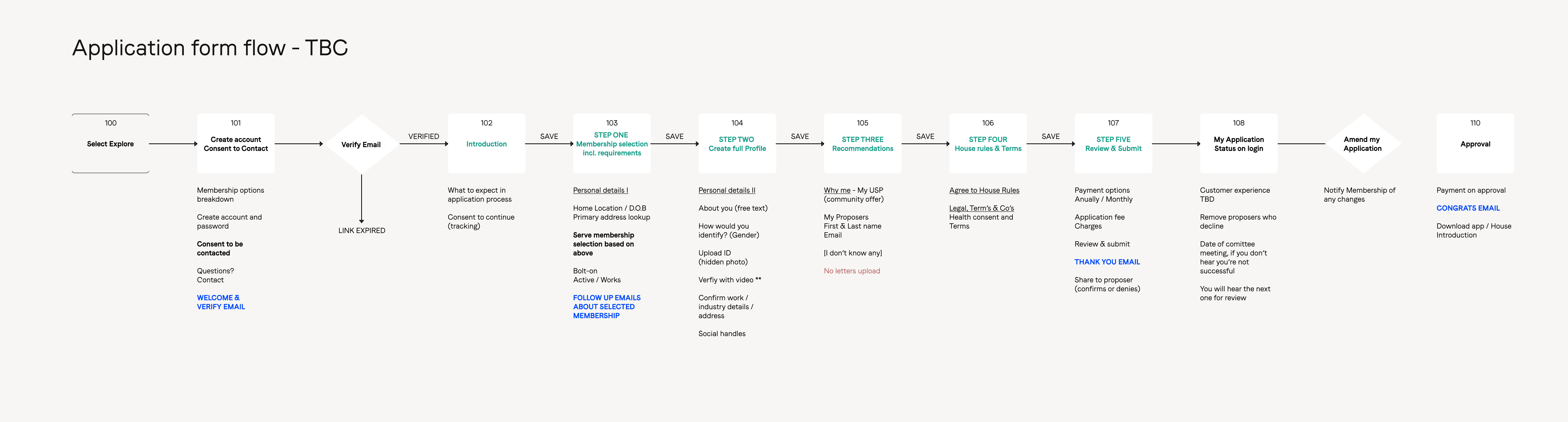
After COVID, Soho House needed to grow its member base fast. The application form was the only acquisition funnel and more than half of people who started it never reached the end. The original form was the first ever built for the product and hadn't been redesigned since launch.
The structural problem: abandoners had never submitted anything, so they left no trace. No email, no session data, nothing to follow up with. We had measurable drop-off and no direct way to understand why.
My role
Senior Product Designer. End-to-end ownership across the full acquisition journey, the membership selection page, the application form, and the price calculator added post-launch.
Cross-functional team: PM, front-end and back-end engineers, user researcher, legal, and copywriter. Six to seven weeks, 2020/21. I ran unmoderated concept testing on the selection page, collaborated with the user researcher on the survey, worked with legal on eligibility logic that shaped the tier system, and directed the copywriter on the open question prompts.
Research approach
Secondary
research
Post-acceptance member survey
(40–50 responses)
Secondary Research
The form hadn't been redesigned since it was first built, years before conversion and form UX research had much to say on the topic. I went through the articles and studies published since, to understand what the field had learned.
Key insights

Cognitive overload
Users stop mid-way, even when they intended to finish. When a form feels like too much effort, it's easier to close the tab and come back later.
Smashing Magazine, 2016
Multi-step forms convert significantly better
Single-page forms convert at around 10%. Break the same content into steps and that can reach 53%. Most people who drop off aren't disinterested, the design gets in the way.
Venture Harbour; Baymard Institute
Form structure affects whether people finish
A peer-reviewed study comparing single-page, multi-page, and conversational formats confirmed that how a form is structured changes whether users complete it.
Rothenbuehler et al., JMIR, 2021
Working Hypotheses
Before designing the survey, I wrote down what I believed was
happening and why.
Hypotheses
The form is losing people in the moment, not permanently. Most abandoners intend to come back the form just gives them no reason to trust it will remember them.
Hypotheses
Price at the end feels like a trap. Discovering the cost after investing 10 minutes is
a worse moment than discovering it upfront.
Hypotheses
No progress signal makes the form feel open-ended.
Users can't tell if they're nearly done or halfway through.
Post-Acceptance Member Survey
With no way to contact abandoners, I surveyed newly accepted members people who'd been through the form recently, often after multiple attempts. 40–50 responses.
81%
had started the application more than once
64%
were unsure how much of the form remained
57%
first learned the membership cost near the end
41%
cited concerns about losing progress when returning
Design principles
Principle #1
No surprises
show price and expectations before asking for effort
Principle #2
Make progress visible
the form should always feel finite
Principle #3
Design for return
remove the penalty for stopping mid-way
Principle #4
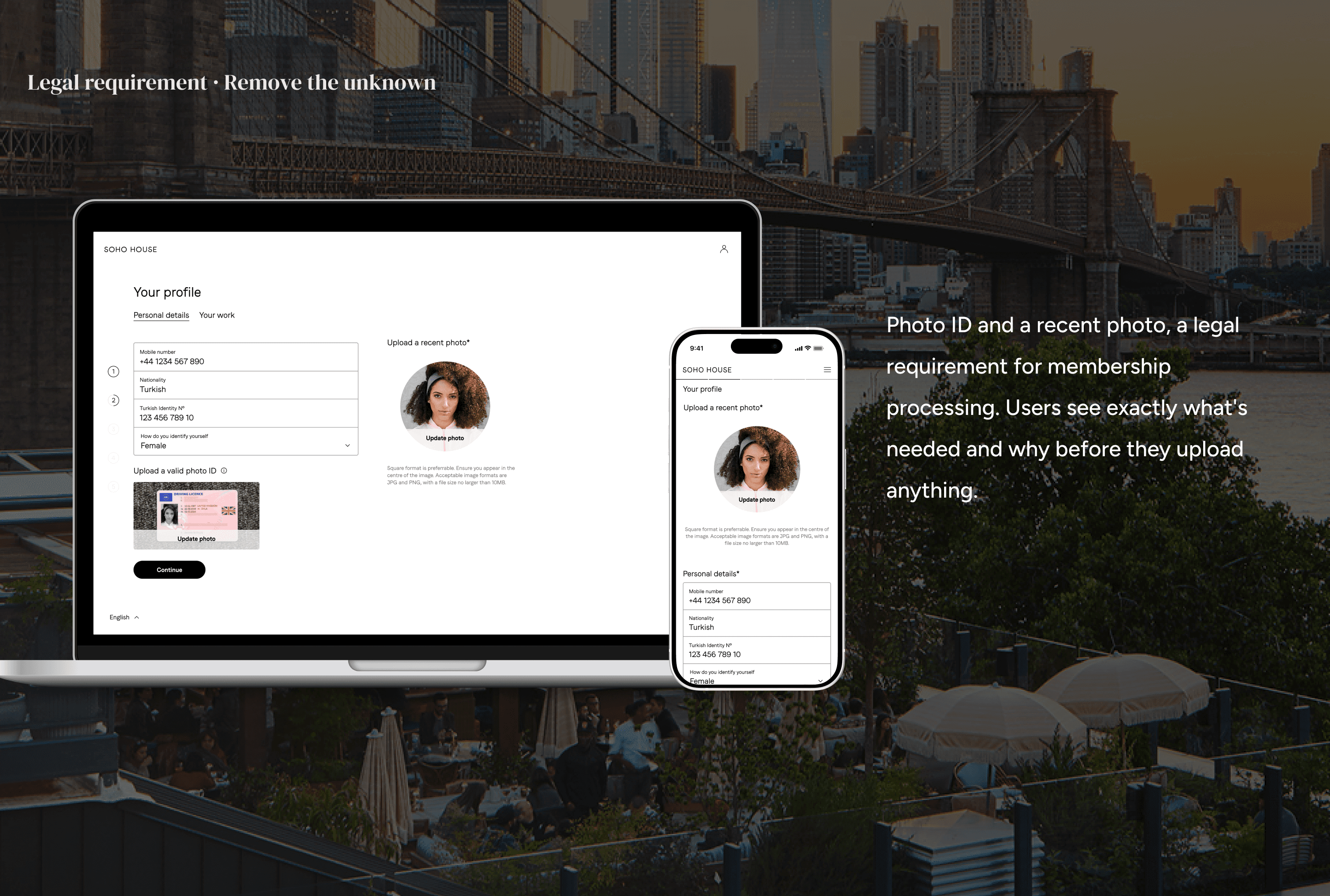
Remove the unknown
every point of uncertainty is a reason to close the tab
Explorations
Four core interventions, each mapped to a research finding:




What Happened
After Launch
Phase 1 shipped. Analytics showed improvement but two patterns emerged that the form redesign alone hadn't solved.
The first was price. Users were now dropping off at step one the membership selection step the moment they saw the cost. The form had stopped losing people at the end. It was losing them at the beginning.
The second was research behaviour. Even with pricing visible, some users were abandoning the form at the membership selection step not because of cost, but because they didn't know which membership was right for them. With four tiers and no way to compare them inside the form, they were closing the tab to go and look it up.
Phase 2
Calculator + Membership Selection Page
Both problems pointed to the same root cause: the form wasn't the right place to make the first contact with price or membership options. That decision-making needed to happen before the application started. Phase 2 addressed both in a single release.
Price calculator
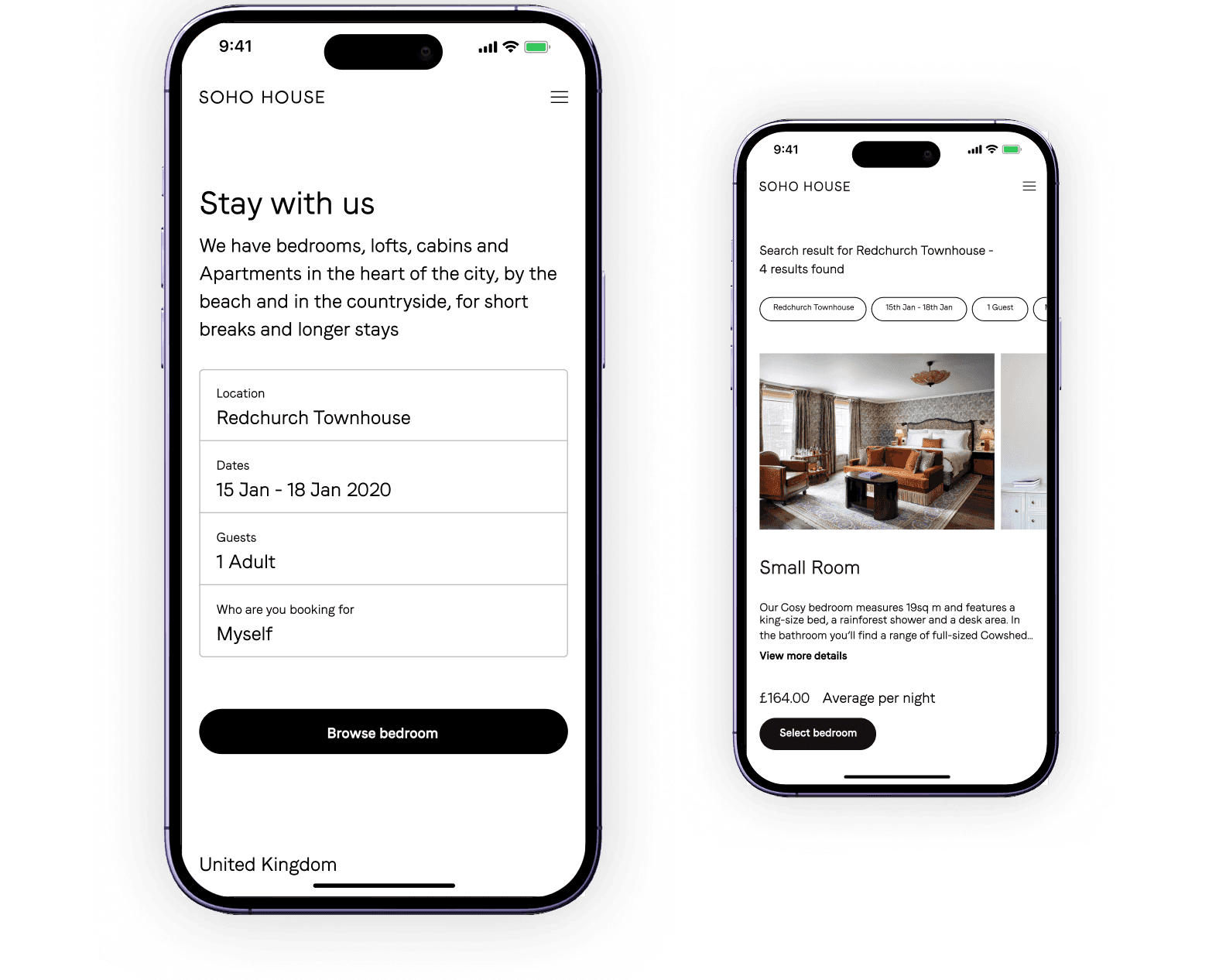
A standalone calculator accessible from the welcome screen alongside Start application. Users could explore membership tiers, payment frequency, and full pricing without creating an account or filling in a single field.
By the time a calculator user reached step one, price wasn't a surprise
Membership Selection Page
A new informational page giving users a clear view of all four membership types before they started the application. The goal was simple: remove the need to leave the form to research memberships. If users arrived informed about what each tier offered, they wouldn't need to pause their application to go and find out.
This page had a practical integration with the form: if a user arrived at the application through it, their membership choice carried through and was pre-selected at step one.
Unmoderated Concept Testing
I ran unmoderated concept testing via UserTesting.com. 15 participants
🇬🇧 UK
🇺🇸 US
🌐 RoW
Layout 1
One membership at a time. Select to reveal details and photos. Others listed as text links.

Layout 2
Modal overlay. All 4 memberships in an equal card grid with photos and descriptions.

Layout 3
Full-page editorial layout. Large images, all 4 memberships visible, horizontal scroll.

Click image to expand
Layout 3 won on favourite and clarity
The recurring reason: all memberships visible without scrolling. Layout 2 tied on visual design, participants valued seeing title and description together.
Layout 1 received no votes across any categories

The final solution:
horizontal scroll with images.
All four memberships visible, no trade-offs.

Outcome & Impact
45–50% →
55–65%
+10–15pp application completion rate
50–55% →
35–45%
-15-20pp form abandonment
20–30%
return completion, new behaviour enabled by auto-save
~193,400
Soho House global members by end of 2022, up from ~120,700 in 2020
Learnings
Phase 1 solved the right problems but only the ones we could identify from research before launch. The two behaviours that Phase 2 addressed (price shock and research abandonment) only became visible once real users were moving through the new form.
The one gap in the research: everyone I surveyed had completed the form. The people who dropped off (the ones I actually needed to hear from) left no trace. In hindsight, a simple exit prompt when someone tried to close the tab would have told me exactly why they were leaving. That's the signal I was working without.