



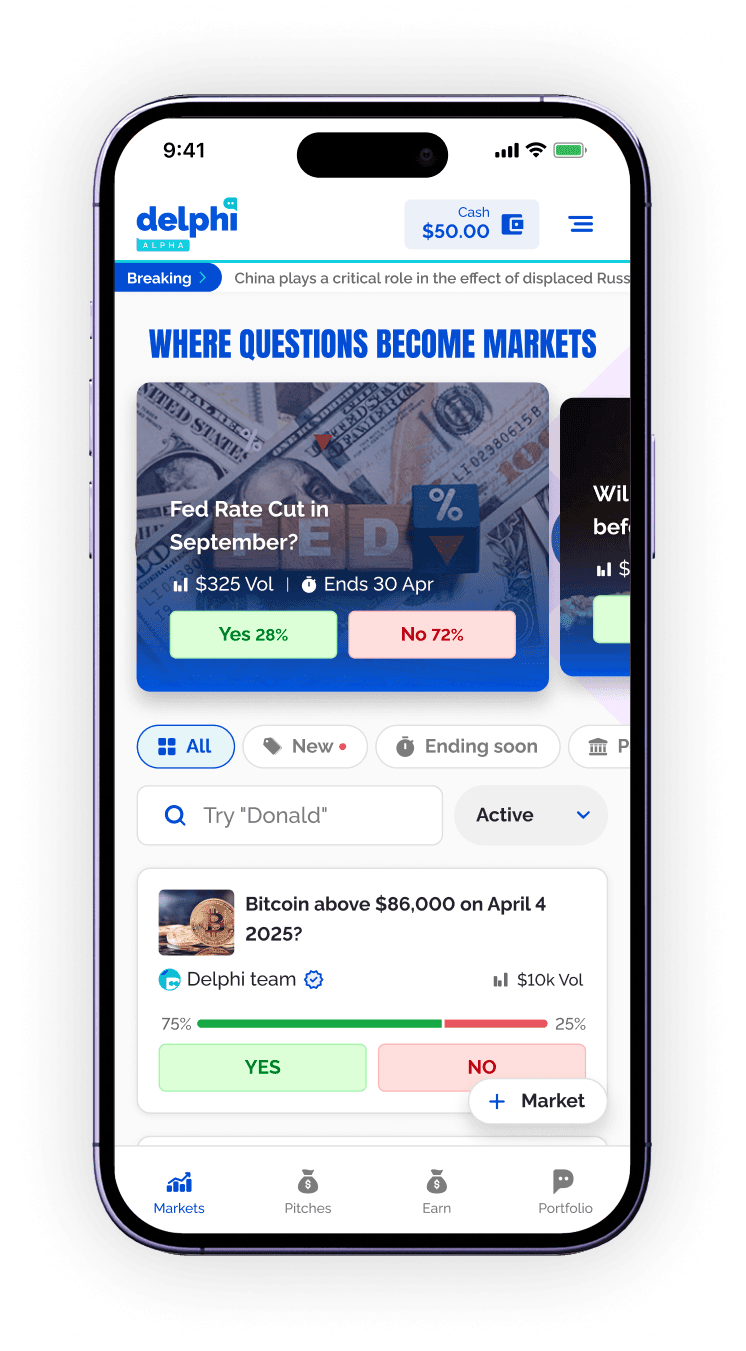
Outcome & Impact
Delphi launched on Cronos mainnet
(Current metrics as of today)
$870K+
Trading volume
1,800+
Traders onboarded
105+
Markets created
My role
Led two product designers from full project through post-MVP on Cronos' first on-chain prediction markets protocol.
Owned: user research, IA, primary flows, and final design approval.
Led: design direction, twice-weekly alignment, critique, and work distribution core flows with me; execution and edge cases with the team.
The job wasn't just designing Delphi. It was making sure three designers shipped one coherent product.
The challenge
Cronos lacked a native prediction markets product. Users had to go elsewhere to discover markets and place trades friction that was pulling activity outside the ecosystem. We had 10 weeks to ship an MVP that could stand up against established competitors while feeling accessible to first-time traders.
Research approach
User
interviews
Competitive
analysis
Workshop
& IA
Prototyping
& testing
Competitive landscape
I looked at 12 existing prediction markets Polymarket, Kalshi, Manifold, and others comparing features, design, and real usage data.

Accessibility gap
Half weren't beginner-friendly. We owned accessibility.
Market creation gap
Only 3 of 12 let users create markets. We made it core.
Engagement, not reach
Polymarket: $607M from 437k users. Limitless: $38M from 600. Depth beats reach.
Click on the image to expand

User research
I ran 7 interviews with a mix of newcomers and experienced users. Instead of asking what they wanted, I had each person pick their favourite protocol Polymarket, Manifold, whatever they actually used and walk me through how they used it, what they looked for, and where they got stuck.
Three patterns kept emerging.
Then Key insights sits directly below.
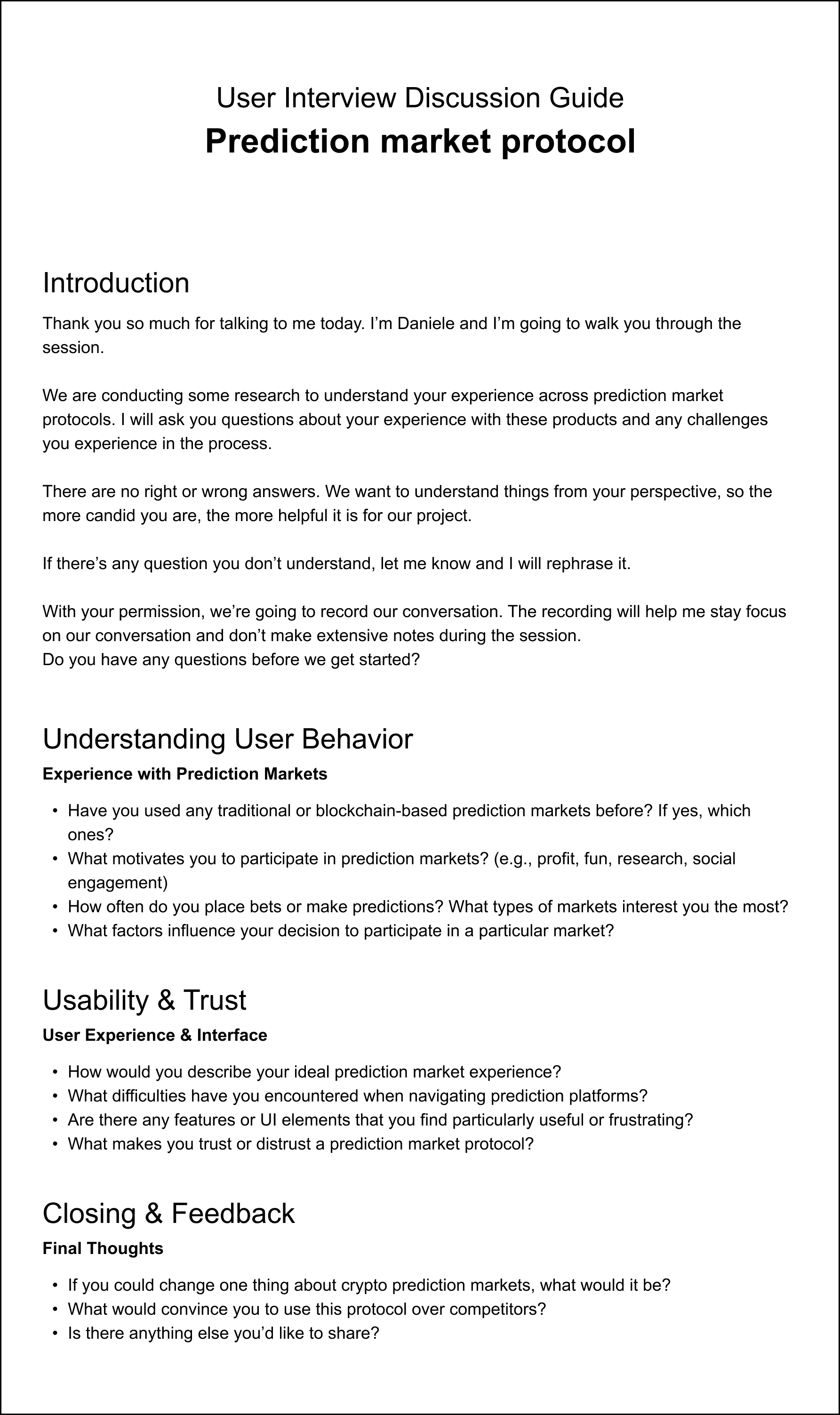
Key insights
Users need to know what they’ll get before putting money in
People join when the market looks active and trustworthy
Exploring markets and managing positions should feel separate
Design principles
Why it matters: These insights shaped the MVP scope and structure, prioritising clarity, confidence, and early participation over feature depth.
Principle #1
Clarity before power
Make outcomes and next steps clear before introducing advanced controls.
Principle #2
Reveal complexity gradually
Only show advanced detail when users need it.
Principle #3
Keep jobs separate
Treat Discover, Portfolio, and Rewards as distinct tasks
Principle #4
Design for confidence
Use clear states, confirmations, and recovery paths to reduce anxiety.
IA workshop
(how I drove alignment)
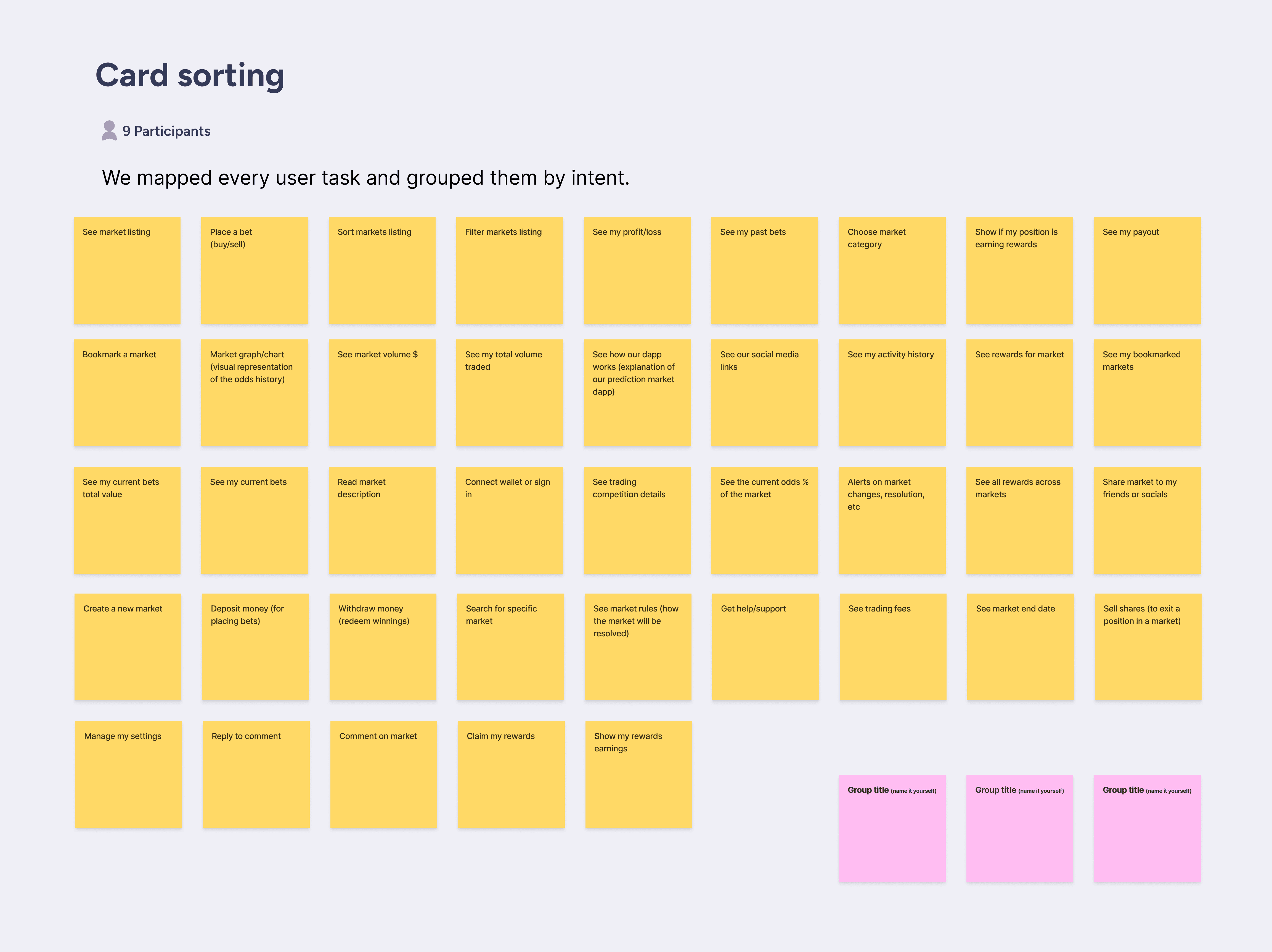
Research time was tight, but alignment on product structure had to happen before a single screen was built. I organised a hands-on card sorting workshop with Product and Engineering (10 participants across both disciplines) to map user tasks, group them by intent, and agree the MVP navigation in the room.
The team walked out with shared ownership of the IA not just my recommendation of it.
Step 1
Step 2
Step 3
Step 4
Wireframing & Validation
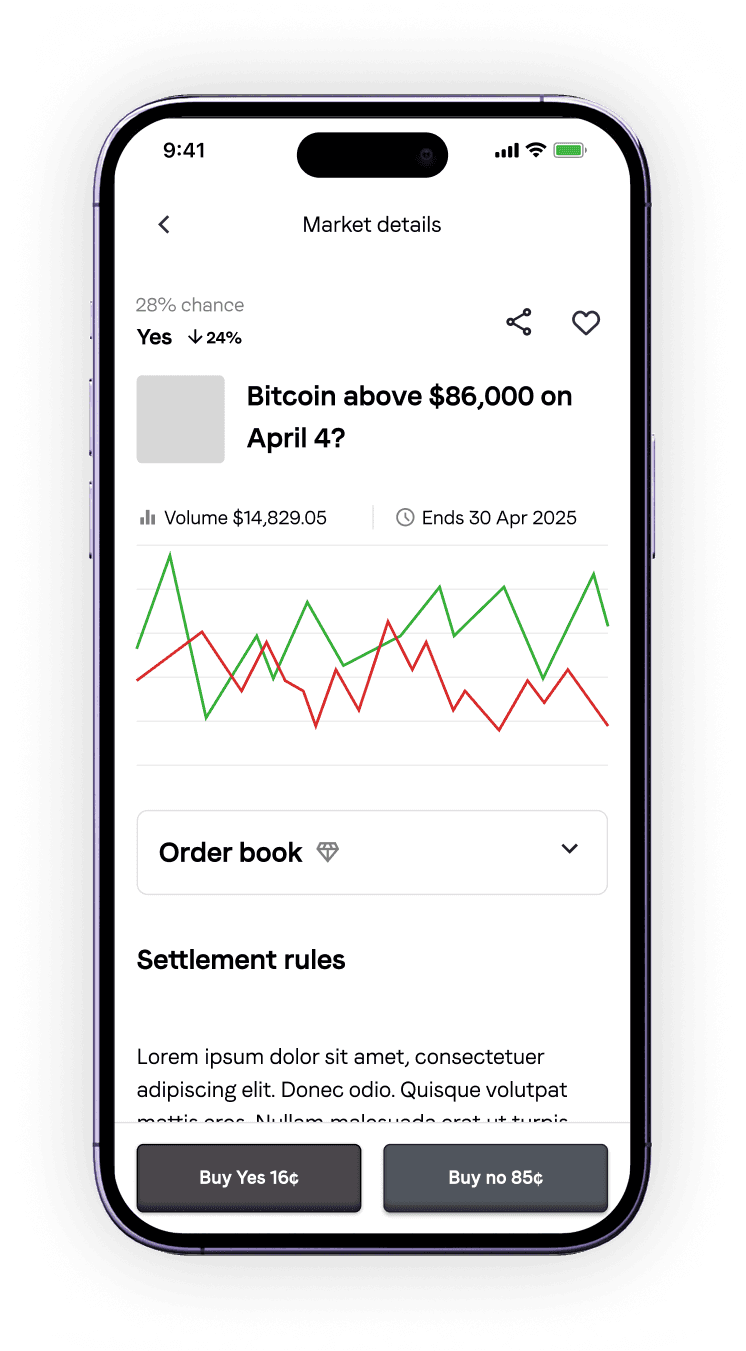
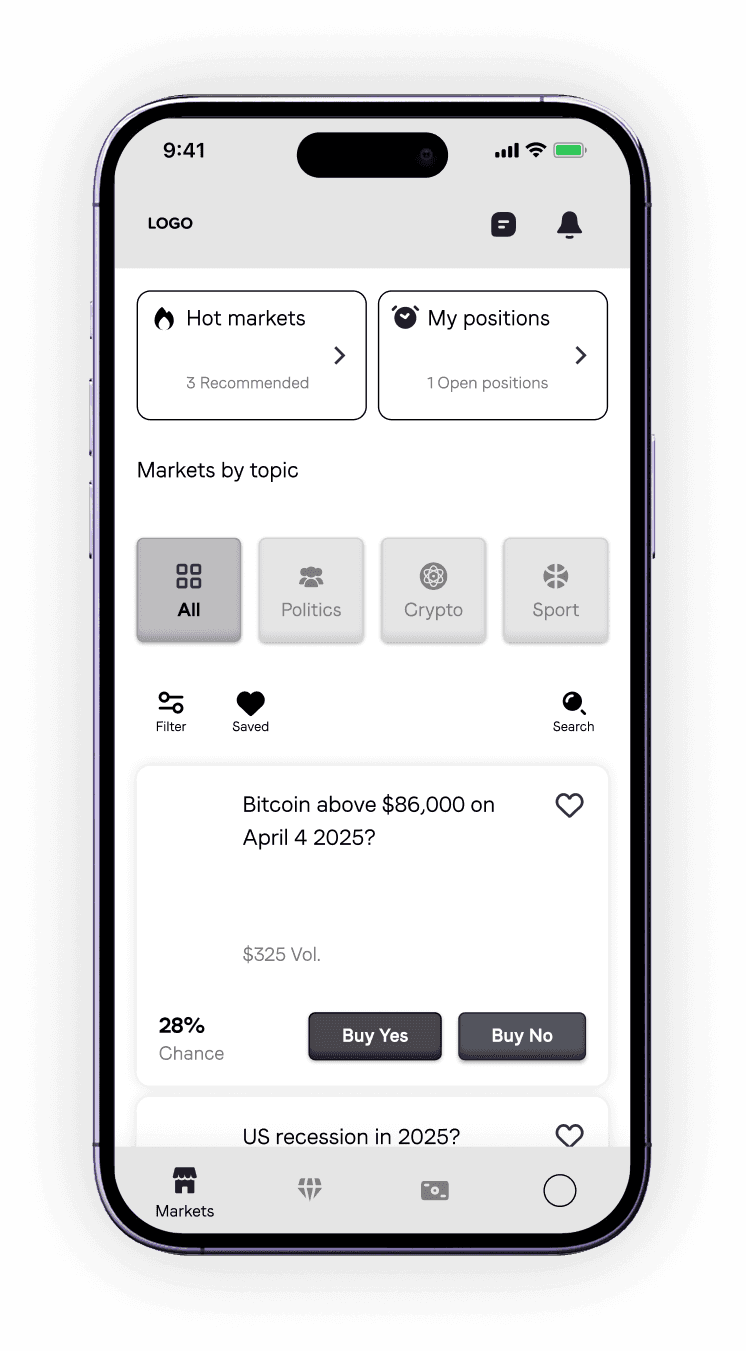
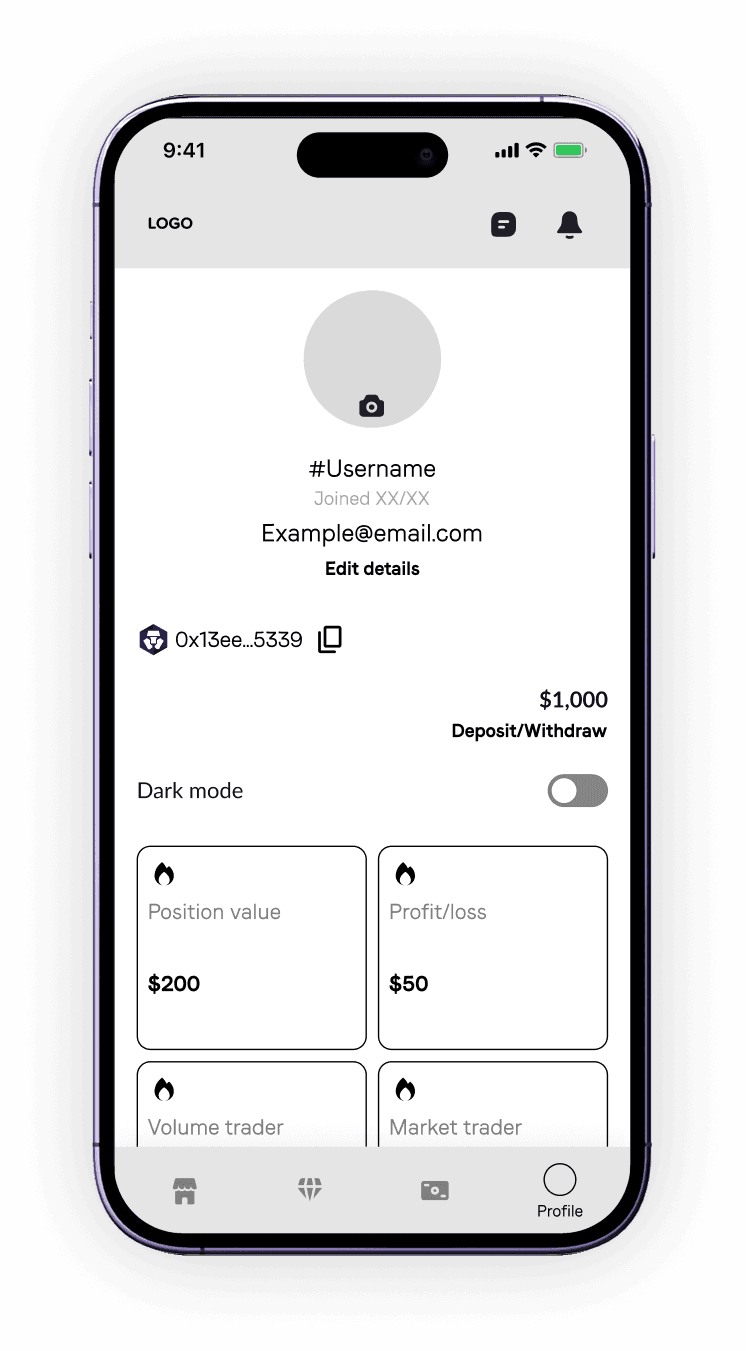
With architecture and principles locked, I moved into wireframing and early validation to pressure-test the riskiest parts of the flow before visual design making sure users could understand the system, complete key actions, and recover from mistakes without extra explanation.
User test results
6 participants tested Delphi across 6 tasks.
Overall
sentiment
4.4/5 average score
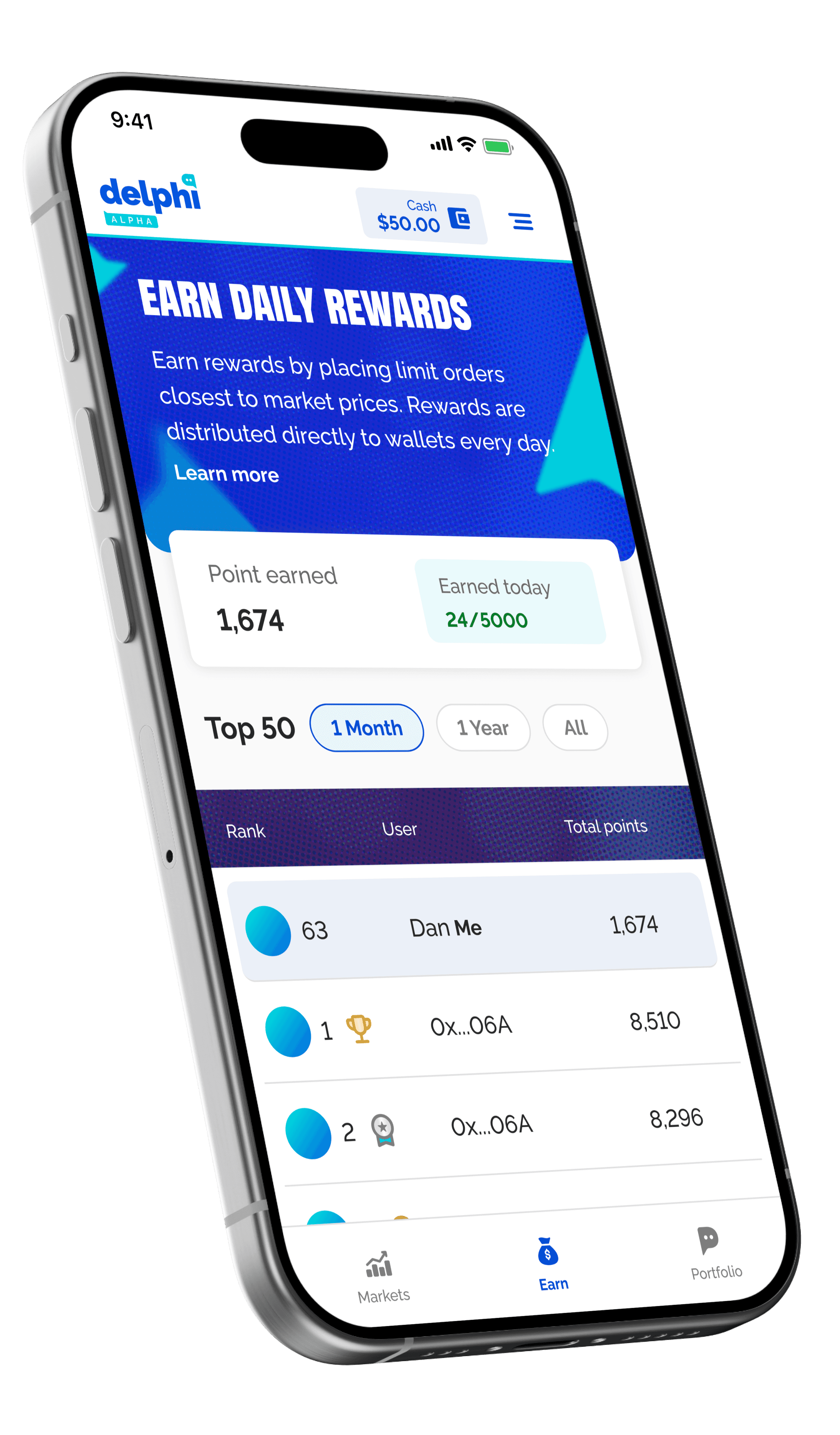
Core flows tested well. The pain point was Rewards: all 6 struggled with limit orders, and several confused "rewards" with "winnings.""
In response, we rebuilt Rewards with inline explanations and split 'rewards' from 'winnings' in the navigation.
"I really like this UI a lot, very similar to stock trading app, not super crypto, it's very simple." — Participant 5
Design decisions
I worked with the Creative team to define the visual direction, colour palette, and tone making sure the interface felt credible and calm in a category prone to feeling chaotic.
From there, I established the core UI foundations and component patterns, evolving them into a lightweight design system the team could build against in parallel. This let two designers work on different surfaces at the same time without drift, a governance move, not just a design one.

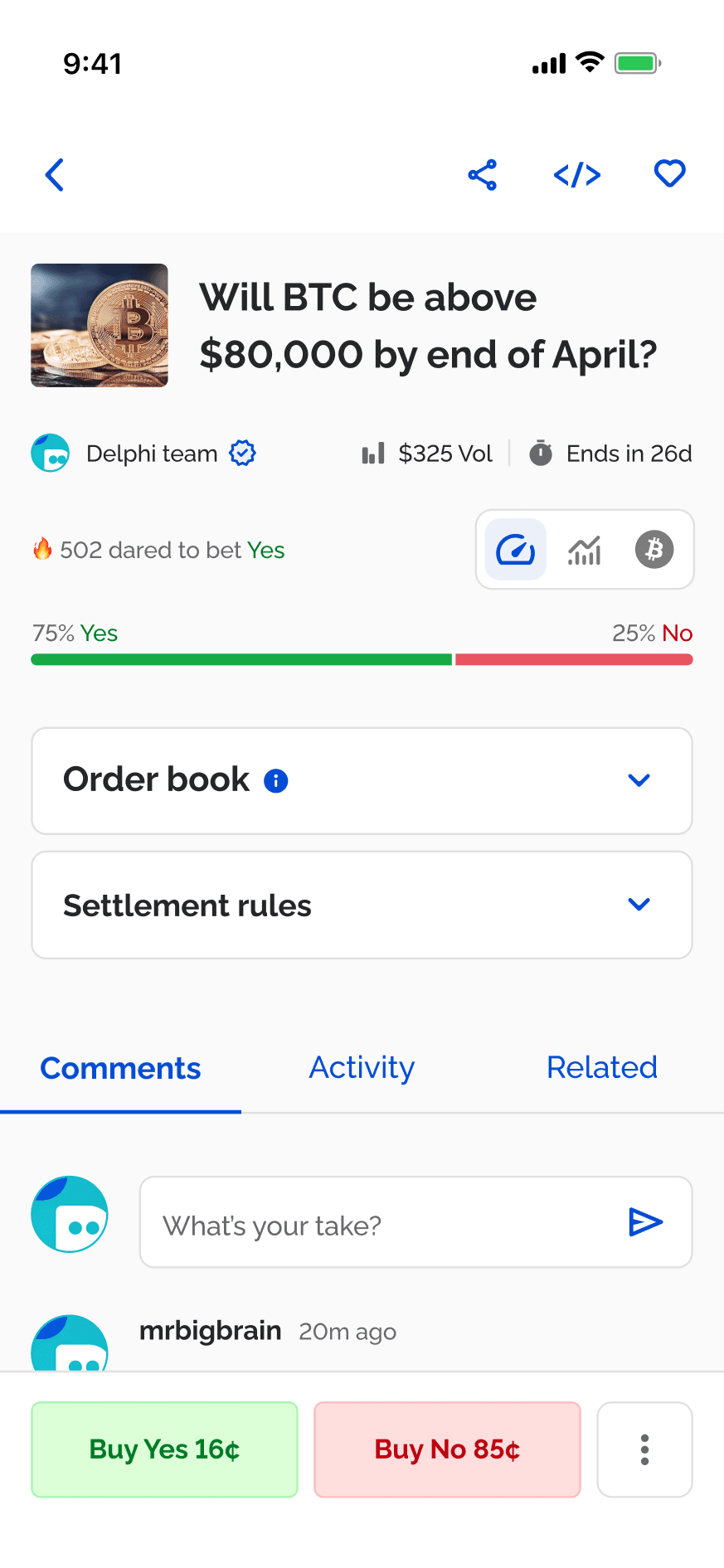
Market Details
The decision-to-trade screen. Live odds, volume, time remaining, order book, and the community thread all sit in one scroll. Yes/No buttons stay pinned to the bottom so the trade action is always one tap away, no matter how deep into the discussion someone goes.
Win celebration
When a market resolves in the user's favour, the payout becomes a moment instead of a dry confirmation. The total winnings are front and centre, and the Share button turns every win into a low-cost growth loop.
Portfolio
The user's home base. Available cash, total holdings, vouchers, and claimable winnings sit in a single scan. The Claimable card promotes itself to a CTA whenever there's money sitting in escrow, so payouts never get forgotten.
Vouchers
Vouchers are the app's core retention lever. This sheet shows every booster the user holds, what each is worth, and which apply to the trade they're about to place. Non-applicable boosters stay visible but dimmed, so users understand why they can't redeem them instead of wondering where they went.
Onboarding
The onboarding flow doubles as a protocol guide. New users are walked through Delphi's major features how markets work, how trades resolve, how to use boosters and vouchers so they leave understanding the protocol, not just the UI. The goal is to turn first-time users into informed traders, not just registered accounts.
Markets feed
The discovery surface. Promotional banners sit at the top of the feed to surface live campaigns, ongoing competitions, and protocol-wide events, so users notice them without having to dig through a separate notifications inbox. Featured markets and category filters sit below.
Trading competition